Laying hens do not produce eggs on a perfectly predictable daily schedule: their output shifts with age, daylight, breed, health, feed, and the natural pause of a broody or molting period. For first-year chicken owners, understanding these patterns explains why a hen may skip days, lay smaller or differently colored eggs, or stop temporarily without being sick. University extension guidance and poultry research show that peak production is followed by a gradual decline, while light exposure and flock management can strongly influence seasonal laying. Knowing what is normal—and which changes deserve attention—helps owners plan egg supplies, protect hen welfare, and spot problems early.
Laying patterns: How hen egg production changes over time
A laying pattern is the way a hen’s egg output varies across days, seasons, and stages of life. The University of Minnesota Extension describes commercial laying performance in terms of hen-day production—the number of eggs produced relative to the number of hens alive on a given day. Backyard owners can use the same basic idea, while remembering that breed, housing, weather, and individual birds make a small flock less uniform than a commercial flock.
Hens commonly produce eggs in successive sequences, or “clutches,” with a pause before the next egg. An egg takes roughly 24 to 26 hours to form, so a hen laying consistently may lay progressively later in the day and then skip a day. The timing is not a promise: an apparently healthy hen may vary, and several flock members may not lay at the same rate.
First eggs and the ramp-up to peak production
Pullets—the term for young female chickens before their first adult molt—often begin laying at about 18 to 22 weeks, although breed and individual development affect the timing. The University of Maine Cooperative Extension notes that egg production generally rises after onset and reaches its most productive period during the early laying cycle. A first egg may be small, oddly shaped, or soft-shelled as the reproductive system adjusts; occasional irregular eggs at this stage do not by themselves establish a health problem.
A useful first-year expectation is a gradual increase rather than an immediate basket of eggs each morning. Some breeds mature earlier than others, and larger-bodied heritage breeds may start later than many production hybrids. If a young hen has not started by around 26 weeks, check her breed’s typical maturity, nutrition, light exposure, stress, and whether she may be hiding eggs before assuming something is wrong.
Peak output, laying sequences, and skipped days
Peak production is the period when a hen’s laying rate is highest, but it does not mean every hen lays one egg every day. The University of Minnesota Extension’s layer guidance describes production as changing over the laying cycle, with a high point followed by a gradual decline. Backyard birds may lay in short sequences and pause; the interval can vary among hens and across the year.
For example, a hen that lays four eggs over five days and then rests for a day can be following a normal rhythm. Small flocks also produce misleading totals: if one of four hens pauses, the household’s daily egg count drops by 25 percent even though only one bird changed her pattern. Track eggs by date and note unusual shells, nest use, and behavior instead of judging a hen from a single missed day.
Egg size and appearance can change with age
Egg size commonly increases as a pullet matures, while shell color is largely determined by breed and usually remains broadly consistent. The U.S. Department of Agriculture’s egg-grading standards classify eggs by weight per dozen, not by the hen’s age; those commercial size categories are useful for comparison but are not a requirement for backyard eggs. A sudden change in shell texture or repeated soft, thin, or misshapen shells is more informative than a one-off variation and can warrant a closer look at diet and health.
Seasonal laying patterns: Why daylight and weather surprise owners
After the daily rhythm comes the seasonal one. Day length is a major environmental cue for reproduction in chickens: shorter autumn and winter days often coincide with reduced laying, while increasing spring daylight can support renewed production. The University of Georgia Cooperative Extension explains that light management is used in layer flocks because photoperiod—the duration of light in a 24-hour period—affects reproductive activity.
Short winter days and reduced egg numbers
Many backyard hens slow down or stop laying in winter, particularly when natural daylight is limited. Extension recommendations for managed laying flocks commonly use roughly 14 to 16 total hours of light to maintain production, but owners should not treat artificial lighting as mandatory. If supplemental light is used, a timer and gradual, consistent schedule are preferable to abrupt changes; preserve a dark period so hens can rest, and follow reputable poultry-welfare guidance.
Cold itself is not the only explanation for a winter slowdown. A hen must maintain body condition while coping with weather, and reduced daylight can coincide with changes in activity and feed intake. Keep water available in unfrozen form, provide a balanced layer ration, and make sure the coop is dry and well ventilated rather than attempting to solve every decline by heating the birds’ space.
Heat, stress, and sudden summer dips
Hot weather can reduce feed intake and place physiological stress on hens, which may lower egg production or affect shell quality. The U.S. Department of Agriculture’s Animal and Plant Health Inspection Service identifies heat stress as a poultry-welfare concern. Provide shade, ventilation, clean water, and space to move; avoid handling or transporting birds during the hottest part of the day when possible.
Other disruptions can also interrupt laying: moving the flock, introducing new birds, predator scares, noisy construction, or sudden changes in feed and routine. A short-lived decline after a clear disturbance may settle as the flock adjusts. A persistent drop, especially with lethargy, weight loss, respiratory signs, or abnormal droppings, should not be attributed to weather alone.
Broodiness and molting: Two normal pauses that look alarming
Some of the most surprising laying gaps are linked to brooding or feather replacement. These are distinct biological states: a broody hen is attempting to hatch eggs, while a molting hen replaces feathers. Both can coincide with little or no egg production, but their behavior and care needs differ.
Broodiness: When a hen wants to hatch eggs
Broodiness is a behavioral and hormonal state in which a hen persistently sits in a nest and attempts to incubate eggs. The University of Kentucky Cooperative Extension describes broody behavior as a natural response that can occur even when eggs are not fertile. A broody hen may remain on the nest, puff her feathers, vocalize defensively, and leave only briefly to eat, drink, and defecate.
During broodiness, egg laying usually pauses. Collect eggs regularly, ensure the hen can access food and water, and decide whether you intend to hatch fertile eggs. If you do not, use humane, welfare-conscious management and consult an extension or veterinary source rather than using harmful methods. Broodiness is more common in some breeds than others, so a hen’s breed can help explain repeated episodes.
Molting: Feather replacement and temporary production loss
Molting is the normal replacement of old feathers with new ones. The University of Florida Institute of Food and Agricultural Sciences notes that molt can be associated with a sharp decline or pause in egg production because the bird’s resources shift toward feather growth. The timing and intensity vary: some hens lose feathers gradually, while others look dramatically bare for a period.
A molting hen needs a complete, balanced diet and a calm environment. Feathers are protein-rich, but owners should not make major dietary changes or add supplements without checking that the overall ration remains appropriate for laying hens. If feather loss is accompanied by wounds, intense itching, parasites, or repeated pecking, investigate those possibilities rather than assuming it is molt.
Flock factors: Breed, feed, health, and egg-hiding behavior
Season and life stage are only part of the explanation. Breed, nutrition, disease, parasites, and nest habits can make two hens of the same age lay very differently. These factors are especially important in a first-year flock because owners may not yet know each bird’s usual pattern.
Breed and individual differences
A breed’s laying reputation is an average, not a guarantee for an individual hen. Commercial egg strains are selected for sustained output, while many heritage or ornamental breeds may lay fewer eggs, mature later, or become broody more readily. The University of Minnesota Extension’s poultry resources emphasize that production depends on both genetic potential and management, so compare a hen with realistic expectations for her breed rather than with a high-output commercial benchmark.
Feed, calcium, and water
A complete layer feed supplies the energy, protein, vitamins, and minerals needed for egg production. The Merck Veterinary Manual explains that dietary calcium is essential for eggshell formation; inadequate calcium can contribute to poor shell quality. Offer feed formulated for laying hens once birds reach the appropriate age, provide clean water continuously, and avoid allowing treats or scratch grains to displace too much of the balanced ration. Follow feed-label directions and seek veterinary guidance for persistent shell abnormalities.
Hidden nests, predators, and egg-eating
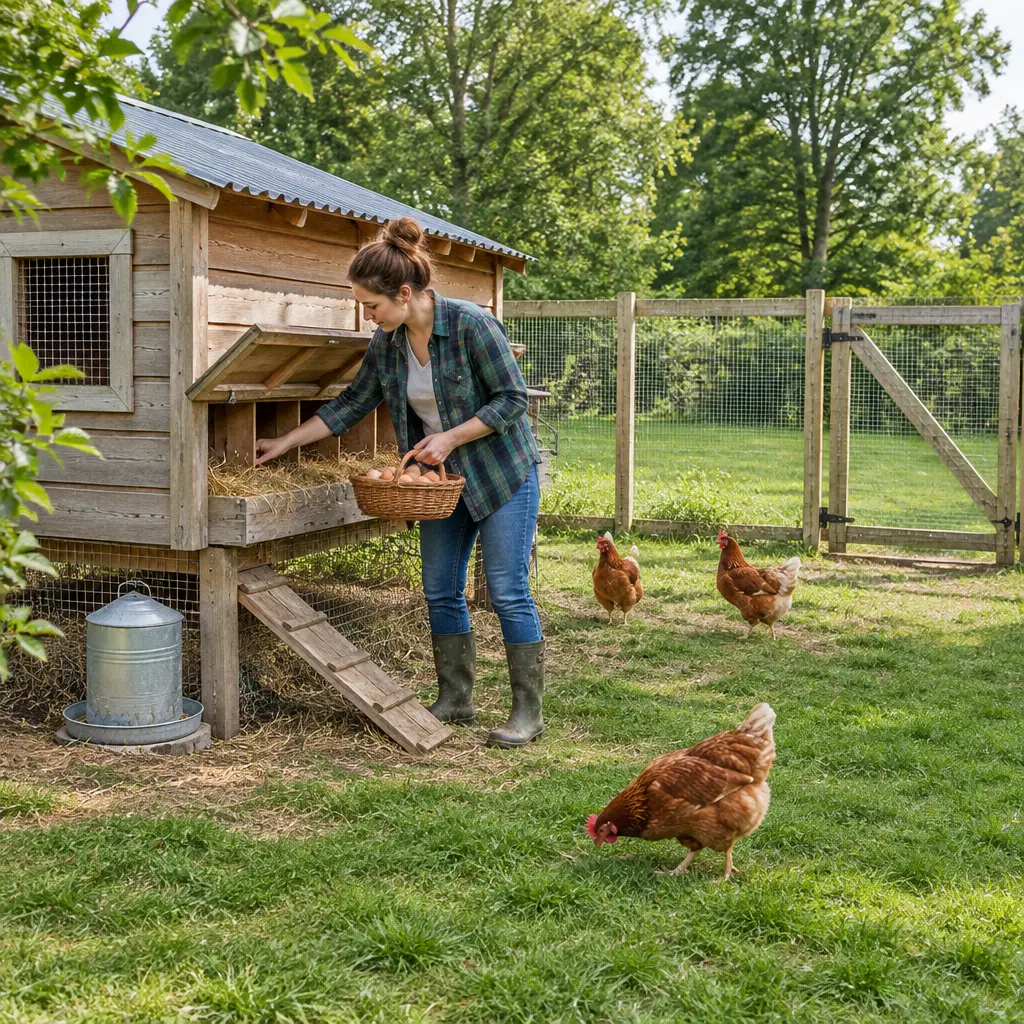
A missing egg is not always a missed ovulation. Free-ranging hens may lay under shrubs, behind stored items, or in other concealed spots; predator activity can also disrupt nesting. Check the run and sheltered corners, keep nest boxes clean and accessible, and collect eggs frequently. If shells or egg contents are disappearing, investigate breakage and egg-eating promptly, since a habit can spread through a flock.
When a laying change signals a health problem
A gradual decline that matches shorter days, molt, broodiness, or advancing age is different from an abrupt drop paired with illness signs. Egg numbers alone cannot diagnose a disease, but a simple record can help identify a meaningful change and give a veterinarian useful context.
Warning signs to monitor
Contact a poultry veterinarian or local extension service if reduced laying is accompanied by persistent loss of appetite, lethargy, weight loss, breathing difficulty, swollen abdomen, lameness, abnormal droppings, repeated soft-shelled eggs, or straining. Egg binding and reproductive disorders can become urgent. Do not attempt invasive treatment based on an online description; isolate a sick bird when appropriate and follow professional advice.
A simple record that makes patterns visible
Keep a daily or weekly log of egg count, shell condition, weather, feed changes, molt, broody behavior, and any flock disturbance. A simple chart can plot eggs collected per day against daylight or temperature; it will not prove cause and effect, but it can reveal recurring seasonal patterns. For small flocks, note observations by individual hen whenever identification is reliable, and use the record to guide questions for an extension educator or veterinarian.
Conclusion: Read the pattern before changing the flock
First-year owners are often surprised because egg laying is a cycle, not a daily guarantee. Production ramps up after a pullet begins laying, varies in sequences, and can pause with short winter days, heat, broodiness, molt, stress, nutrition problems, or illness. Breed and individual differences matter, and hidden nests can make a productive hen appear unproductive.
Track eggs and flock conditions, provide balanced feed and reliable water, and judge changes against the hen’s age and normal behavior. If a decline is persistent or comes with signs of illness, consult a poultry veterinarian or extension service. For further reading, look for current laying-hen guidance from your state university’s cooperative extension and animal-welfare resources before making changes to lighting, diet, or flock management.
Sources: University of Minnesota Extension, “Raising chickens for eggs,” https://extension.umn.edu/small-scale-poultry/raising-chickens-eggs; University of Maine Cooperative Extension, “Small Scale Poultry Housing,” https://extension.umaine.edu/publications/2221e/; University of Georgia Cooperative Extension, “Lighting Programs for Small and Backyard Poultry Flocks,” https://extension.uga.edu/publications/detail.html?number=B1373; U.S. Department of Agriculture, Agricultural Marketing Service, “United States Standards, Grades, and Weight Classes for Shell Eggs,” https://www.ams.usda.gov/sites/default/files/media/EggStandard.pdf; U.S. Department of Agriculture, Animal and Plant Health Inspection Service, “Poultry Heat Stress,” https://www.aphis.usda.gov/animal_health/animal_dis_spec/poultry/downloads/heat_stress.pdf; University of Kentucky Cooperative Extension, “Brooding and Broodiness in Chickens,” https://www.uky.edu/Ag/AnimalSciences/pubs/asc202.pdf; University of Florida Institute of Food and Agricultural Sciences, “Molting of Laying Hens,” https://edis.ifas.ufl.edu/publication/AN080; Merck Veterinary Manual, “Nutritional Requirements of Poultry,” https://www.merckvetmanual.com/poultry/nutrition-and-management-poultry/nutritional-requirements-of-poultry.