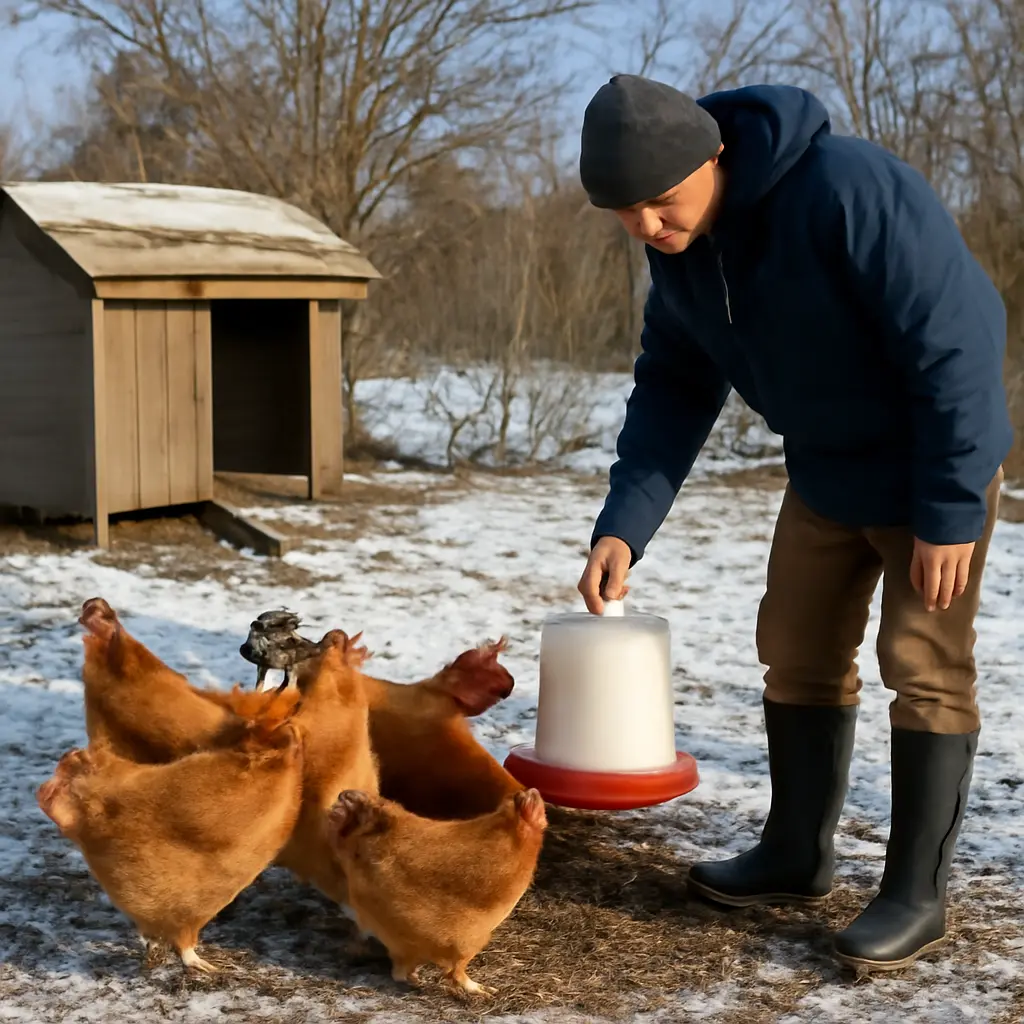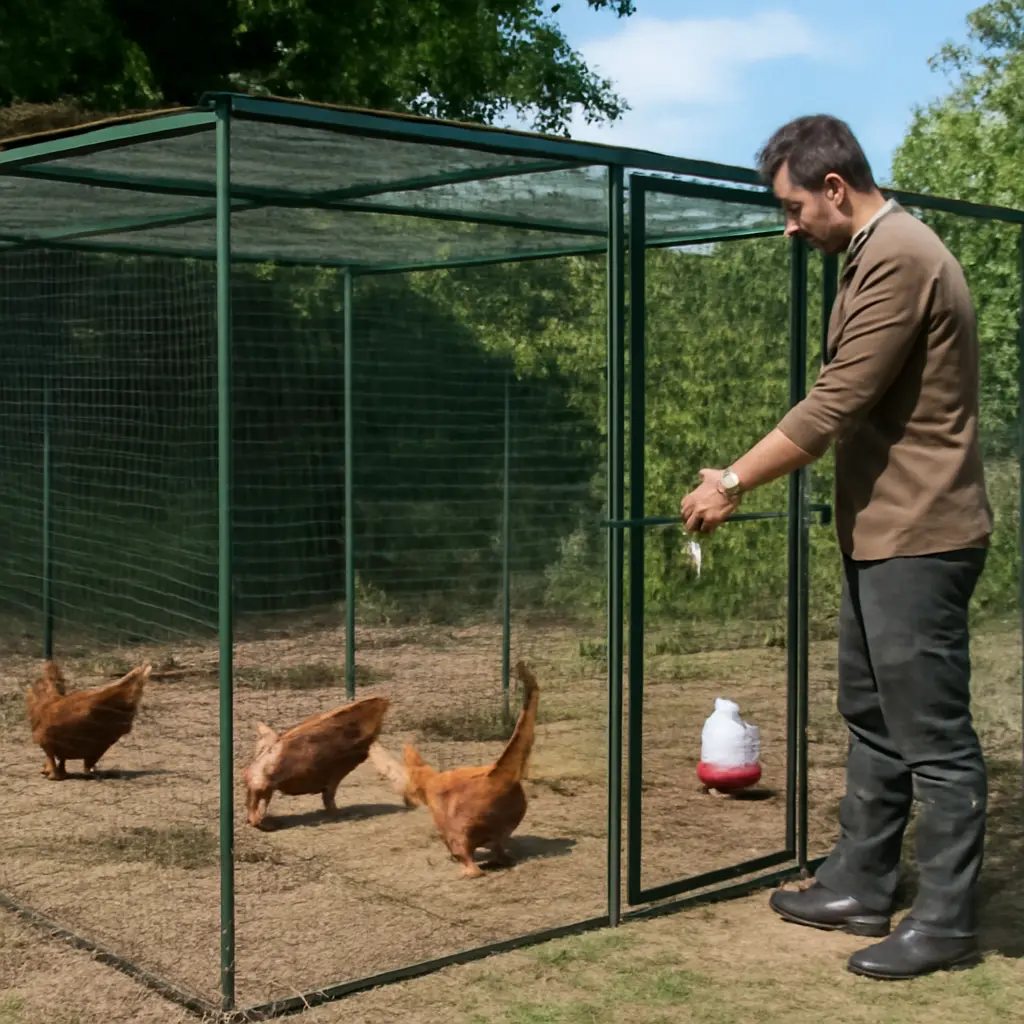
A safe chicken run is an enclosed outdoor area that lets birds scratch, peck, dust-bathe, and explore while reducing exposure to predators, toxic plants, contaminated soil, and severe weather. A good run combines secure fencing and a covered top with dry, varied ground, clean water, shade, and enough space for the flock to use it without constant crowding. The best design depends on bird numbers, local predators, climate, and whether the run sits on soil or a movable base; guidance from the University of Minnesota Extension and the RSPCA supports prioritizing predator-proof construction, usable space, and opportunities for natural behavior.
A chicken run’s safety depends on enclosure, space, and enrichment
A run is the outdoor enclosure attached to, or used alongside, a poultry coop. It is not simply a fenced patch of ground: its purpose is to offer birds room to forage and exercise while preventing escapes and limiting risks. Chickens naturally scratch and peck for food, investigate their surroundings, and dust-bathe, so a barren, overcrowded enclosure may be secure yet still fail to support normal behavior.
There is no single universally safe run size. Recommendations vary with flock size, breed, time spent outdoors, and access to other space. As a practical starting point, the University of Minnesota Extension recommends at least 4 square feet of coop floor area and 10 square feet of outdoor run area per standard-size chicken; larger areas are preferable, particularly when birds spend much of the day confined. These figures are planning guidance, not a guarantee against stress or damage to the ground.
A useful run plan considers three connected attributes: physical security, room and resources for foraging, and ongoing maintenance. The sections below explain how to assess each one and adapt it to local conditions.
Predator-resistant construction protects a chicken run
Predator-resistant construction means designing the run to deter animals from climbing, digging, squeezing through gaps, or entering through a weak door or roof. The RSPCA’s poultry guidance emphasizes secure housing and protection from predators; in practice, the exact threat varies by location. Foxes, raccoons, dogs, coyotes, snakes, and birds of prey may require different barriers, so observe local wildlife and ask experienced poultry keepers or agricultural extension staff about regional risks.
Hardware cloth, also called welded wire mesh, is generally more resistant to damage than lightweight chicken wire. Chicken wire is intended mainly to contain poultry, not to stop determined predators. Choose sturdy mesh with openings small enough to prevent the likely local predators from reaching through, and fasten it securely to a strong frame. Inspect edges, corners, latches, and the junction between the run and coop: a small opening or loose panel can undermine an otherwise solid enclosure.
Mesh, doors, and ground-level defenses
A secure run uses strong mesh on its sides, reliable latches, and protection against digging. A buried mesh barrier or outward-facing wire apron can discourage predators from tunneling at the perimeter. The apron should be firmly fixed and covered or otherwise arranged to avoid sharp exposed edges that could injure birds or people. A well-fitted gate should close without gaps, and latches should be difficult for animals to manipulate.
No mesh size or apron depth is suitable for every predator and soil type. Check recommendations for your area, and inspect after heavy rain, frost, fallen branches, or digging activity. A visible gap under a gate, disturbed soil along the fence, or bent wire is a reason to repair the enclosure promptly rather than wait for signs of an attack.
Overhead cover and weather shelter
A roof or strong overhead netting helps protect against aerial predators and can provide shade or rain cover. Netting must be taut and maintained so birds cannot become tangled in sagging sections. Solid roofing over part of the run gives birds a dry place in wet weather, while an open or ventilated area helps prevent heat from becoming trapped. In hot climates, shade and airflow are essential; in cold or windy conditions, a sheltered section can reduce exposure without sealing the run so tightly that moisture and odors build up.
The coop remains the flock’s secure nighttime shelter. Close birds inside at dusk and check that doors shut properly. Automatic doors can help with routine, but they should be tested regularly and should not replace checks for trapped birds, mechanical failure, or a predator that has breached the run.
Space and ground conditions support natural foraging
Foraging is the process of searching for and gathering food, and it includes behaviors such as scratching, pecking, and exploring. A safe run should give chickens opportunities to perform these behaviors without forcing them to compete excessively for space, shade, feeders, or water. More area can reduce rapid vegetation loss and muddy ground, but even a large run needs thoughtful layout and care.
Run area, flock size, and rotation
Calculate usable outdoor area by multiplying the run’s length by its width, then divide by the number of birds. For example, a 100-square-foot run shared by 10 standard-size chickens provides 10 square feet per bird, matching the University of Minnesota Extension’s cited minimum planning recommendation. Increase the area where possible, especially for larger breeds, long daily confinement, or a site that becomes bare and muddy.
A rotational system divides outdoor space into sections and allows one area to rest while birds use another. Resting ground can recover vegetation and may help reduce concentrated wear, though it does not automatically eliminate parasites or disease organisms. Move birds only to areas that are safe, and avoid using rotation as a substitute for cleaning, parasite monitoring, and sound biosecurity.
Safe vegetation, soil, and dust-bathing areas
A planted run can offer shade, cover, and material for exploration, but chickens may quickly eat or scratch away delicate growth. Select plants known to be safe for poultry, and prevent access to ornamental plants, garden chemicals, treated wood, and compost or waste that may contain hazards. The University of Minnesota Extension advises checking plant safety rather than assuming that a familiar garden plant is harmless to birds.
Provide a dry, well-drained area where birds can dust-bathe. Dust-bathing is a normal maintenance behavior in which chickens work loose material through their feathers. A shallow, sheltered patch of dry soil or suitable dust-bathing substrate can help, while persistently wet or compacted ground can discourage the behavior and contribute to muddy conditions. Avoid dusty materials that may irritate birds’ respiratory systems, and keep the area free of droppings and standing water.
Enrichment and daily care make the run usable
Enrichment means providing features that encourage exploration and reduce a monotonous environment. It complements, but does not replace, adequate space and safe construction. The RSPCA’s poultry welfare guidance describes the importance of opportunities for behaviors such as foraging and dust-bathing; practical run features can make those behaviors easier to perform.
Perches, visual cover, and foraging opportunities
Stable low perches, logs, safe branches, and visual barriers can make a run more interesting and offer birds places to investigate or retreat from one another. Arrange features so they do not create predator access, block exits, or leave birds trapped in corners. Use clean, untreated materials and remove objects with splinters, sharp edges, or signs of rot.
Scatter a modest amount of appropriate feed in clean litter or offer it in a foraging device, while keeping the main ration available in a way that all birds can reach. Do not use moldy feed, spoiled food, or unknown scraps. Monitor the flock: if dominant birds monopolize resources, add separate feeding and drinking points rather than expecting enrichment alone to resolve competition.
Clean water, feed, and hygiene
Clean water must remain accessible throughout the day, with containers placed where they are less likely to be filled with litter or droppings. Check them often in freezing or hot weather. The Centers for Disease Control and Prevention recommends washing hands after handling poultry, eggs, or equipment and keeping poultry areas and supplies separate from food-preparation spaces, because backyard flocks can carry germs even when birds appear healthy.
Remove wet bedding and accumulated manure, clean feeders and drinkers, and address puddles or leaking waterers. Avoid allowing feed to sit where it attracts rodents or wild birds. These steps support flock health and reduce opportunities for contamination; they are part of routine care, not a guarantee that disease will be prevented.
A practical inspection routine catches hazards early
A run’s safety can change as materials wear, vegetation grows, and weather shifts. A brief daily check, supplemented by more thorough periodic inspections, helps identify problems before they become serious. The following list can be adapted to the flock and local risks:
- Check that gates and coop doors close securely and that no mesh, roofing, or latches are loose.
- Look for digging, tracks, damaged wire, gaps, sharp edges, or objects that could fall.
- Confirm that water is clean and available, feed is dry, and shaded and sheltered areas remain usable.
- Check for mud, standing water, mold, droppings buildup, toxic plants, and signs of rodents or wild-bird access.
- Observe bird behavior for crowding, persistent aggression, limping, unusual lethargy, or a bird being excluded from food and water.
For example, if repeated rain turns a run into a muddy patch, adding drainage, improving roof coverage over part of the area, and allowing damaged ground to rest may be more effective than simply adding bedding. If birds repeatedly gather at one corner, check whether shade, water, or a preferred dust-bathing spot is concentrated there and adjust the layout to distribute resources.
Conclusion: build a run that is secure, spacious, and engaging
A safe chicken run combines predator-resistant construction with enough usable space, dry ground, shelter, clean water, and opportunities to scratch, peck, explore, and dust-bathe. Extension guidance offers helpful minimum planning figures, but flock size, climate, terrain, and local predators determine what a particular setup needs. Regular inspection and prompt maintenance keep those protections effective.
Start by measuring the space available, identifying likely predators and weather pressures, and checking the run for weak points. Then improve the ground and enrichment in ways that suit your birds, and consult a local agricultural extension service or poultry veterinarian when health or regional safety questions arise.
Sources: University of Minnesota Extension, Raising chickens for eggs, https://extension.umn.edu/small-scale-poultry/raising-chickens-eggs; RSPCA, Welfare of poultry, https://www.rspca.org.uk/adviceandwelfare/farm/poultry; Centers for Disease Control and Prevention, Backyard Poultry, https://www.cdc.gov/healthy-pets/about/backyard-poultry.html