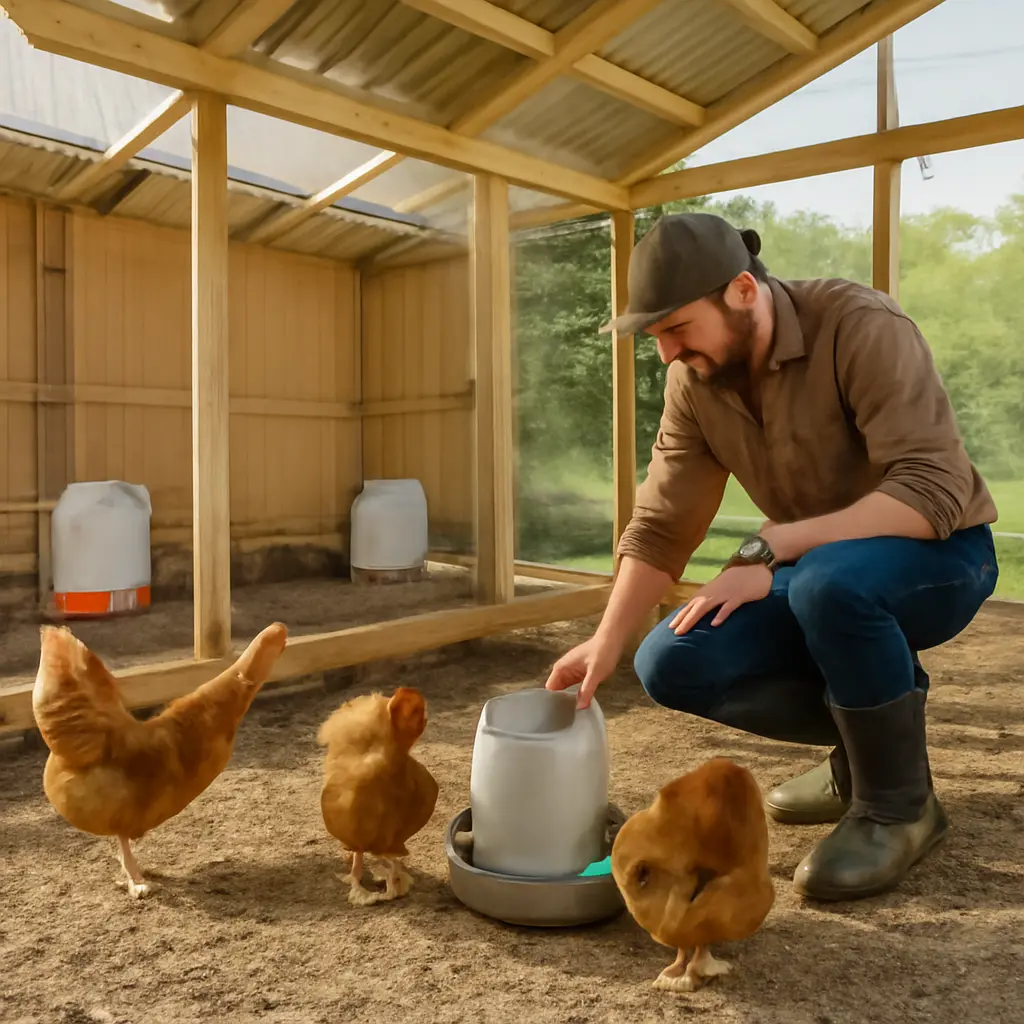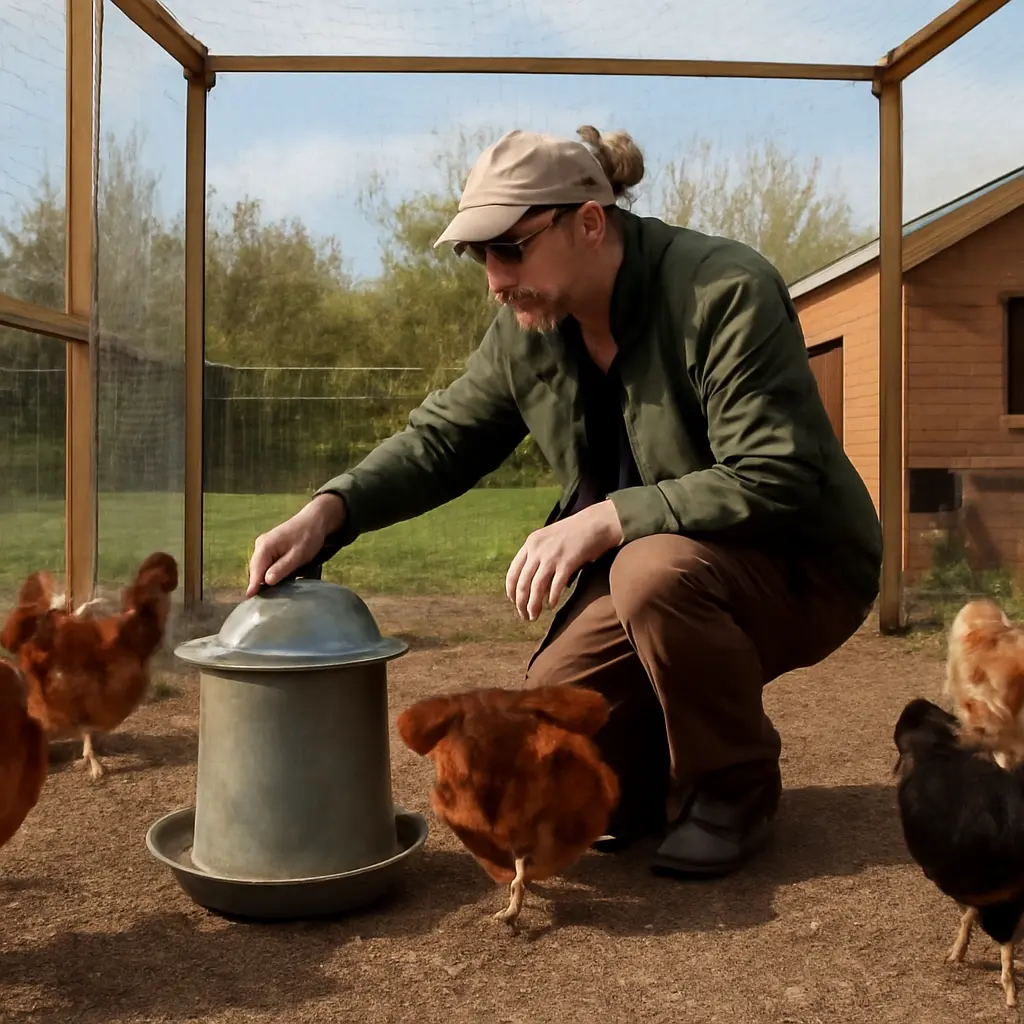
For most backyard flocks, free-choice feeding—keeping a complete poultry ration available throughout the day—can work well, but it is not automatically better than measured feeding. It suits chickens that regulate their intake and have constant access to clean water, while portioned feeding can help when birds are gaining too much weight, feed is being wasted, or different groups need different diets. The right choice depends on age, ration type, housing, flock health, and how closely you monitor body condition and egg production.
Free-choice feeding and chicken feed access
Free-choice feeding, also called ad libitum feeding, means providing feed so birds can eat when they choose rather than receiving one or more measured servings. The University of Minnesota Extension describes layer management as providing a nutritionally complete ration and making feed available consistently; this is different from allowing unlimited access to scratch grains or treats. The distinction matters: a complete layer ration is formulated to supply essential nutrients, whereas extra foods can dilute that balance.
For laying hens, a complete layer feed commonly contains about 16% crude protein and roughly 3–4% calcium, though exact needs and product formulations vary. The National Research Council’s poultry nutrient recommendations and university extension guidance emphasize that nutrient requirements change with age and production stage. A feeder can remain available all day, but the ration still needs to match the birds.
Complete-ration free-choice feeding
Complete-ration free-choice feeding is continuous access to a feed designed to meet the flock’s nutritional needs when eaten as the primary diet. It is usually the simplest option for a small flock of birds of similar age and production stage. Keep the feeder dry and clean, and check that less assertive birds can reach it; a feeder that is technically full but monopolized by dominant hens does not provide equal access.
Measured or restricted feeding
Measured feeding means offering a planned quantity at set times or limiting access to a daily allotment. It can help owners track consumption, manage obesity, or control feed costs, but it requires careful calculation and observation. A fixed ration that is too small can leave birds hungry or undernourished, and competition at feeding time may disadvantage subordinate birds. Do not impose a restriction without considering the feed label, flock condition, and advice from a poultry veterinarian or extension specialist.
Supplemental foods are not a free-choice ration
Scratch grains, kitchen scraps, and treats are supplements, not substitutes for complete feed. University of Minnesota Extension advises limiting treats so they do not displace the balanced ration; a commonly used backyard guideline is to keep treats to no more than about 10% of daily intake. This is a practical ceiling rather than a precise nutritional prescription. Frequent treats can reduce consumption of protein, vitamins, and minerals, while excess energy can contribute to unwanted weight gain.
How free-choice feeding affects chicken health and flock management
Free access can support steady intake, but it does not guarantee balanced nutrition or healthy weight. Intake changes with bird size, activity, temperature, feed energy density, and egg production. The Merck Veterinary Manual notes that poultry nutrition must be matched to species, age, and production purpose; in practical terms, a laying hen, a growing pullet, and a broiler should not simply share one unrestricted ration.
Age and production stage
Chicks need starter feed, growing birds need an appropriate grower ration, and active layers need a layer ration with suitable calcium. Feeding layer feed to immature birds can provide more calcium than they need, while feeding a low-calcium grower ration to laying hens may not support eggshell formation. Separate groups when necessary, and follow the feed manufacturer’s age and use instructions. Roosters and non-laying birds in a mixed flock also complicate use of a high-calcium layer ration, so seek extension or veterinary guidance on a suitable mixed-flock approach.
Body condition, egg output, and feed intake
A practical way to judge whether the setup is working is to track feed disappearance, body condition, eggs, and behavior together. A sudden drop in consumption or egg production may reflect heat, illness, parasites, stress, poor-quality feed, or water problems—not simply the feeding schedule. Record how much feed is offered and left, inspect birds regularly, and investigate persistent weight changes or production declines with a poultry health professional.
Waste, pests, and feed storage
An always-full feeder can make it harder to notice waste, spoilage, or pest activity. Feed spilled onto litter attracts rodents and wild birds, and damp feed can mold. The U.S. Department of Agriculture advises protecting stored feed from moisture and pests; keep feed in a secure, dry container and clean up spills. A feeder designed to reduce scratching and scattering can make free-choice feeding more economical and hygienic.
Water and feeder access
Feed access only works when clean water is continuously available. Birds need water for digestion and normal body functions, and hot weather can sharply increase water demand. Provide enough feeder and drinker space to reduce crowding, check equipment daily, and make sure birds can reach it without being blocked. If some hens are consistently pushed away, add or reposition equipment rather than assuming the flock is eating adequately.
When a chicken setup benefits from free-choice feeding
Free-choice feeding is most useful when birds are healthy, have a suitable complete ration, and can access feed without excessive competition. It simplifies routine care and allows birds to eat across the day. It is less suitable as an unchecked system when feed is being wasted, birds are becoming overweight, mixed age groups share inappropriate feed, or treats make up a substantial part of the diet.
Signs the system is working
- Birds maintain appropriate body condition and normal activity.
- Egg production and shell quality are reasonably consistent for the flock’s age and season.
- Feed remains dry and clean, with little scattering or spoilage.
- All birds can reach feed and water, including timid or lower-ranking hens.
- Feed consumption is stable enough for you to notice unusual changes.
Signs to adjust the setup
- Feed disappears unusually fast, or substantial amounts are spilled, fouled, or left uneaten.
- Birds gain excessive weight, lose condition, or show persistent differences in access.
- Egg production or shell quality changes alongside altered feed intake.
- Chicks, growers, layers, and non-layers are sharing a ration that does not suit all groups.
- Rodents, wild birds, mold, or dampness are affecting feed storage or the feeder.
For example, a small flock of same-age laying hens eating a complete layer ration may do well with a covered feeder kept available throughout the day. If the same flock scatters feed, attracts rodents, or becomes overweight while receiving frequent treats, the answer may be a better feeder, tighter treat limits, or a measured plan—not simply more feed. Monitor the result and make changes gradually.
Conclusion: choose feeding access that fits the flock
Free-choice feeding benefits many backyard chickens when “free choice” means reliable access to an age-appropriate, nutritionally complete ration—not unlimited access to treats. The key considerations are feed type, life stage, body condition, water, competition, and waste. Start by checking the ration label and observing the birds; then track feed use and flock condition before deciding whether continuous or measured feeding is the better fit. For persistent health, weight, or laying problems, consult a poultry veterinarian or local extension service.
Sources: University of Minnesota Extension, Feeding Chickens, https://extension.umn.edu/small-scale-poultry/feeding-chickens; National Research Council, Nutrient Requirements of Poultry, Ninth Revised Edition, https://nap.nationalacademies.org/catalog/2114/nutrient-requirements-of-poultry-ninth-revised-edition-1994; Merck Veterinary Manual, Nutritional Requirements of Poultry, https://www.merckvetmanual.com/poultry/nutrition-and-management-poultry/nutritional-requirements-of-poultry; U.S. Department of Agriculture, Biosecurity for Birds: Feed and Water, https://www.aphis.usda.gov/livestock-poultry-disease/avian/defend-the-flock/biosecurity.