
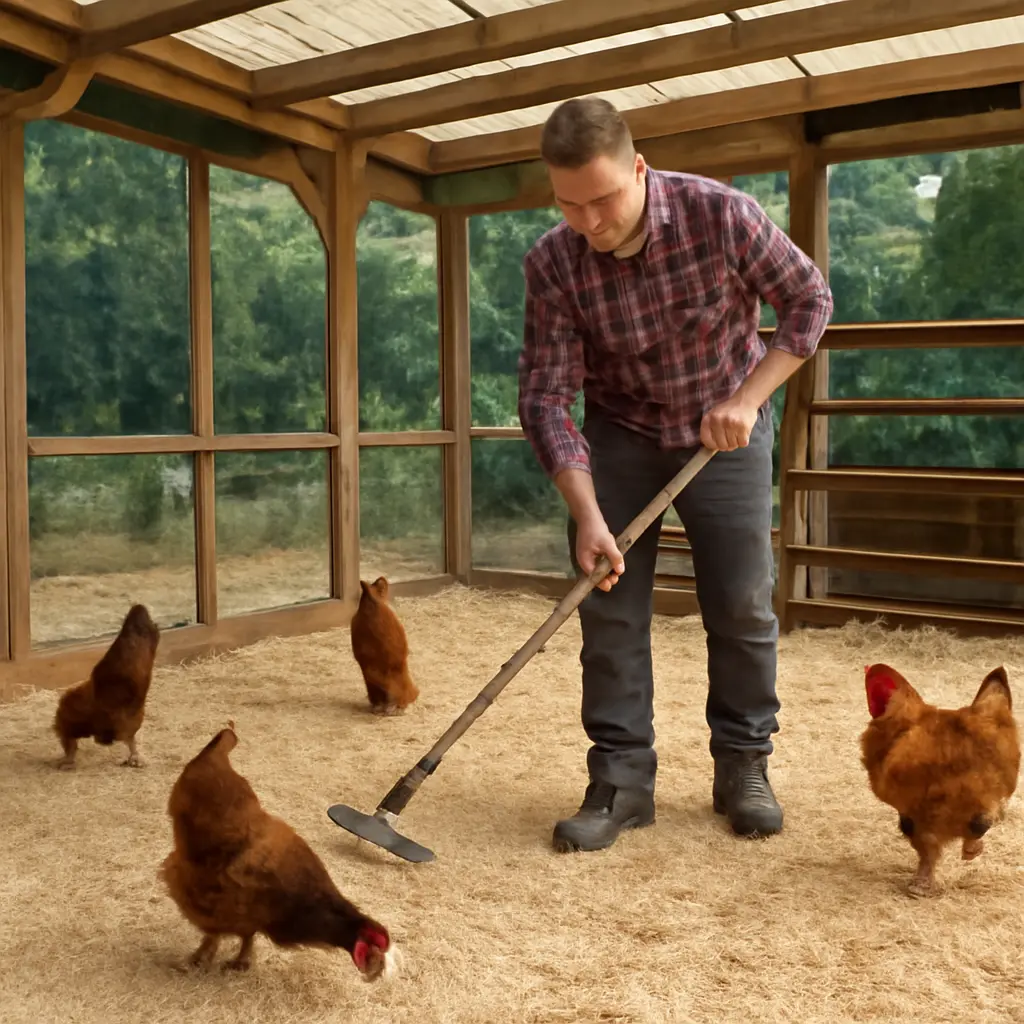
Pine shavings and straw can both serve as chicken-coop bedding, but neither makes hens happy by itself: comfort depends on dry, clean, low-dust litter, suitable nesting areas, and opportunities to scratch and forage. For most small backyard flocks, clean, coarse pine shavings are easier to manage in the coop than long straw because they absorb moisture more evenly and are less prone to forming damp, compacted layers. Straw can still work well when it is dry, frequently refreshed, and paired with good ventilation. Research on laying hens shows that access to litter for dust bathing and foraging matters to welfare, but there is no reliable universal “happiness score” proving that one material always wins. The practical choice is the bedding your flock can use safely and that you can keep dry.
What pine shavings versus straw means for hen welfare
Bedding is the loose material placed on a coop floor to absorb moisture, dilute droppings, and provide a surface for resting, scratching, and dust bathing. The University of Kentucky Cooperative Extension describes litter management as a way to maintain a dry environment and reduce the effects of moisture and manure buildup. Bedding is not a substitute for ventilation, frequent manure removal, or clean water.
“Hen happiness” is not a single directly measured scientific outcome. Welfare research instead examines indicators such as behavior, health, feather condition, injury, and the ability to perform motivated behaviors. The European Food Safety Authority’s assessment of laying-hen welfare identifies access to suitable litter as important because hens use litter for foraging and dust bathing. In a large-scale study of laying hens, dust bathing and litter-directed behavior were observed as distinct activities, reinforcing that a usable floor surface matters—not simply which material is in the coop.
The key practical distinction is how each material behaves. Pine shavings are usually loose, absorbent flakes. Straw consists of hollow cereal-crop stems, often sold in long lengths or chopped. Both can provide a scratchable surface when dry; both can become unhygienic if wet litter is left in place.
Pine shavings: a loose, absorbent litter
Pine shavings are small wood flakes commonly used as poultry litter. Their relatively loose structure makes droppings easier to spot and remove, and clean shavings can absorb some moisture. Choose untreated, low-dust product intended for animal bedding. Avoid fine sawdust, which can become airborne, and never use aromatic cedar shavings; poultry-extension guidance commonly cautions against cedar because its aromatic compounds can irritate birds’ respiratory systems.
Straw: a hollow-stem bedding material
Straw is the dry stalk left after grain harvest; it is different from hay, which is harvested as animal feed and may contain seeds and leafy material. Long straw can be springy and appealing for nesting, but it may mat together or hide damp patches. Chopped straw is generally easier to spread and turn than long stems. The University of Minnesota Extension advises keeping poultry litter dry and managing it to limit moisture and ammonia, regardless of the material selected.
How bedding affects scratching, dust bathing, and comfort
A suitable litter surface lets hens investigate, scratch, and perform dust-bathing movements. These behaviors are not exclusive to either pine or straw: material depth, dryness, particle size, flock access, and maintenance all influence whether hens actually use the floor. A thin, wet layer of either bedding can frustrate scratching and expose birds to dirty, ammonia-producing litter.
Foraging and scratching
Scratching is a normal food-search behavior. Loose shavings are easy for many hens to rake through, while straw can provide a more resistant surface and may conceal scattered feed. If using straw, chopped pieces are often more manageable than long, tangled stems. A simple observation is more useful than assumptions: check whether birds scratch and explore the litter, or avoid a damp, compacted area.
Dust bathing and feather care
Dust bathing involves repeated movements in loose, dry substrate, including tossing material through the feathers. Hens may use litter for this behavior, though a dedicated dry dust-bath area with suitable fine, clean material can make access more dependable. Neither coarse straw nor large wood flakes should be assumed to provide the ideal dust-bathing substrate on their own. Keep dust-bath material dry and avoid products that create excessive airborne dust.
Nesting and resting
Bedding on the coop floor and nesting-box material serve related but different purposes. Straw is often chosen for nest boxes because it is springy and easy to shape, while shavings can also cushion eggs and are simple to replace. Keep nest boxes clean and dry, and collect eggs regularly. Floor bedding should not be allowed to become so deep or clumped that it obstructs access to perches, pop doors, or feeders.
Pine shavings versus straw for moisture, air quality, and upkeep
Moisture management often determines which bedding works better in a particular coop. Wet litter encourages microbial breakdown of manure and can contribute to ammonia buildup. The National Institute for Occupational Safety and Health notes that poultry-house air can contain ammonia and organic dust; this is relevant to both birds and people who clean coops. Smell is a useful warning, but a coop can have air-quality problems before a person notices a strong odor.
Absorbency and clumping
Pine flakes generally spread and mix with droppings in a way that makes localized wet spots visible, though their absorbency varies by flake size and product. Long straw can bridge over wet areas or pack into a mat, so the surface may look dry while moisture remains underneath. This is not a guarantee that shavings stay drier: a leaking drinker, poor drainage, or inadequate ventilation can overwhelm any litter.
Ammonia, dust, and respiratory health
Ammonia forms as nitrogen in manure breaks down, especially when litter is damp and poorly ventilated. The University of Georgia Cooperative Extension recommends controlling moisture and providing adequate ventilation as central parts of poultry-house management. Excessive dust from very fine shavings, moldy straw, or dried manure can also irritate respiratory systems. Buy clean material, keep it dry, and remove moldy or heavily soiled bedding promptly.
Cleaning frequency and practical workload
There is no single replacement schedule that fits every coop. Flock size, floor area, climate, ventilation, and drinker design all affect how quickly litter becomes wet or soiled. Remove wet patches and droppings as needed, inspect beneath drinkers and perches, and replace bedding when it stays damp, smells of ammonia, or becomes heavily contaminated. Shavings may make spot-cleaning easier for some keepers; straw may require more frequent turning or removal if it mats.
Which bedding should you choose for your flock?
For many backyard coops, coarse pine shavings are the straightforward choice for the floor because they are easy to spread, inspect, and spot-clean. Straw is a reasonable alternative when it is dry, clean, and managed to prevent compacted wet layers. There is no strong comparative evidence establishing one as universally superior for hen welfare, so use flock behavior and litter condition as your guide.
Choose pine shavings when
- You want a loose floor litter that is easy to rake and spot-clean.
- You can source untreated, low-dust shavings intended for animal bedding.
- Your coop has a history of straw matting or hiding wet patches.
Choose straw when
- You can keep it dry and replace or turn it before it compacts.
- You prefer chopped straw for easier handling and less tangling.
- You want a springy material for nest boxes, while still managing floor litter separately if needed.
A simple coop-side comparison
A useful real-world test is to try one material at a time in a small, comparable area or during separate periods, keeping ventilation, flock size, and cleaning routines as consistent as possible. Record how often wet spots appear, how much time cleaning takes, whether the litter mats, and whether hens scratch and dust bathe. This is not a controlled scientific trial, but it helps identify what works in your own climate and coop.
The following comparison summarizes typical tendencies, not guaranteed performance:
| Feature | Pine shavings | Straw |
|---|---|---|
| Floor texture | Loose flakes; often easy to scratch through | Springy stems; chopped straw is easier to manage |
| Wet-litter visibility | Often easier to spot-check | Long stems may conceal or bridge over damp areas |
| Main concern | Fine dust or unsuitable wood product | Matting, trapped moisture, or moldy material |
| Best practice | Use clean, coarse, low-dust shavings | Use dry, clean, preferably chopped straw and inspect beneath the surface |
A simple “welfare dashboard” can include three observations: whether the litter is dry and friable, whether the air is free of persistent ammonia odor or heavy dust, and whether hens use the floor to scratch and explore. A change in behavior, respiratory signs, or persistent wetness calls for correcting the underlying management problem—not just adding fresh bedding on top.
Conclusion: dry, usable litter matters more than the label
Pine shavings often have an everyday-management advantage because they are loose and straightforward to inspect, while straw can work well when dry and kept from matting. Neither material guarantees happier hens. Welfare depends on clean air, dry litter, suitable nesting, and enough usable substrate for normal behavior. Choose a clean, low-dust product, monitor the coop closely, and let your hens’ behavior and the condition of the litter guide adjustments. For flock-specific advice, consult a poultry veterinarian or your local university extension service.
Sources: University of Kentucky Cooperative Extension, Poultry: Litter Management, https://afs.ca.uky.edu/poultry/poultry-litter-management; European Food Safety Authority, Welfare of laying hens on farm, https://www.efsa.europa.eu/en/efsajournal/pub/7789; J. A. Lindner and colleagues, Dustbathing in laying hens: a review, https://doi.org/10.1016/j.applanim.2021.105401; University of Minnesota Extension, Raising chickens for eggs, https://extension.umn.edu/small-scale-poultry/raising-chickens-eggs; National Institute for Occupational Safety and Health, Poultry Dust and Respiratory Health, https://www.cdc.gov/niosh/docs/2004-143/; University of Georgia Cooperative Extension, Poultry Housing: Ventilation and Temperature, https://extension.uga.edu/publications/detail.html?number=B1265


