Hens laying eggs on the coop floor are usually responding to a nest-box problem, a mismatch between their nesting habits and the setup, or competition from other birds. Floor eggs are eggs laid anywhere other than a nest—often in bedding, corners, or beneath feeders—and they are more likely to get dirty, cracked, or eaten. The good news is that a few practical changes can often redirect hens: provide enough appealing nest boxes, make them accessible and private, keep them clean, and gather eggs frequently. Guidance from university extension services and poultry specialists also points to lighting, flock behavior, and the age or experience of the hens as factors worth checking.
Why Hens Lay on the Floor: Nesting Behavior and Setup
A floor egg is an egg laid outside a designated nest box. Laying away from the nest does not automatically mean a hen is sick or deliberately misbehaving; it often means the available boxes do not feel suitable at the moment she needs them. Hens naturally seek a secluded, comfortable place to lay, and their choice can be shaped by access, light, flock pressure, bedding, and established habits.
The problem matters because eggs laid on the floor can become contaminated or damaged, and floor eggs may encourage other birds to develop the same habit. University of Minnesota Extension advises providing approximately one nest box for every four to five hens. That is a useful starting point, but box count alone does not guarantee use: placement and condition matter too.
Insufficient, crowded, or poorly placed nest boxes
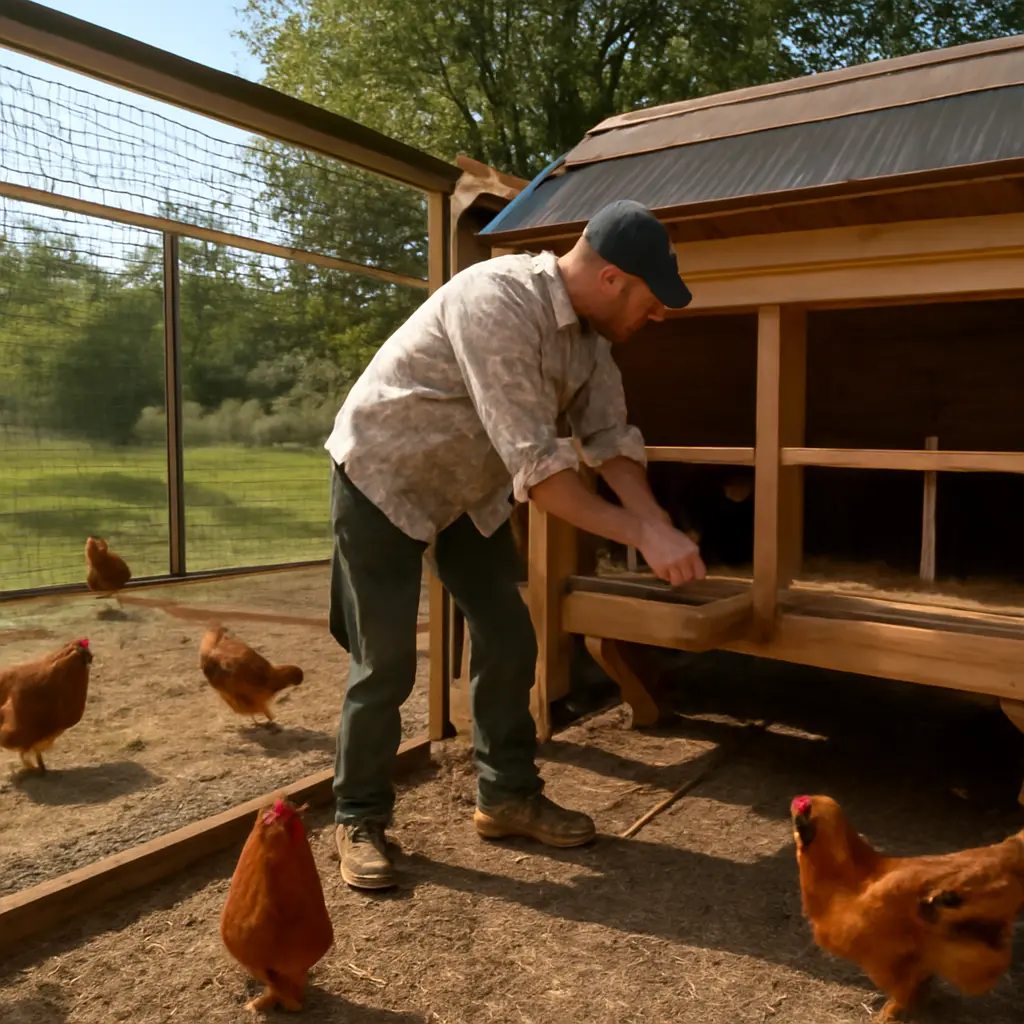
A nest box is a protected laying space, usually lined with clean, dry material. If too few boxes are available, hens may queue or be forced to seek another spot. A commonly recommended allowance is one box for every four to five hens, though flock dynamics can make extra boxes helpful. Place boxes in a quiet, shaded area that is easy for birds to reach but not so exposed that they feel watched or disturbed.
Boxes that feel uncomfortable or unsafe
Hens may avoid boxes that are dirty, damp, unstable, too bright, difficult to enter, or occupied by a dominant bird. Check that the boxes are large enough for your breed, have secure footing, and contain fresh bedding. A perch or step can help birds reach elevated boxes, but avoid placing boxes so high that hens struggle to use them. Keep feed and water away from the nesting area where practical, since activity and spills can make the space less inviting.
Common Reasons Hens Lay Floor Eggs
Once the nesting area is assessed, look for the reason the hens prefer another location. Floor laying commonly reflects a combination of unsuitable boxes, competition, poor timing, or learned behavior rather than a single cause. Observing where and when eggs appear can help distinguish a flock-wide setup issue from one hen’s particular routine.
Nest-box competition and pecking order
A hen may abandon a box if another bird guards it, pecks her, or repeatedly enters while she is trying to lay. In a mixed-age or newly combined flock, social rank can affect access to preferred spaces. Offer several boxes in different positions rather than making every bird depend on one popular box, and watch for bullying or blocking during the morning laying period.
Inexperience, timing, and learned habits
Young pullets approaching their first laying period may explore the coop before settling on a consistent nest. Some hens also lay before they have reached the boxes, especially if they are shut out of the nesting area or become accustomed to laying in a particular corner. Keep the preferred nesting area available during the usual laying hours and collect eggs regularly so floor spots do not become established as familiar laying sites.
Light, disturbance, and the coop environment
A bright, noisy, or frequently disturbed nest area may feel less secure than a quiet floor corner. Conversely, a dark coop can make boxes hard to locate, particularly for inexperienced birds. Aim for a calm, accessible layout with nest boxes that are easy to find but provide some privacy. Sudden changes to coop arrangement, bedding, or flock membership can also disrupt established habits.
How to Stop Hens Laying on the Floor
The most effective response is to make the nest boxes more attractive than the floor and remove cues that reinforce floor laying. Change one or two factors at a time where possible, then monitor egg locations for several days. A simple daily record of the number and location of eggs can show whether the adjustments are working.
Improve nest-box access and comfort
Start with the basic setup: provide roughly one box per four to five hens, keep the boxes clean and dry, and use soft, clean bedding. Position them in a quiet part of the coop, away from heavy foot traffic. If a box is repeatedly avoided, check whether it is unstable, cramped, too high, too exposed, or difficult to enter before adding more boxes.
Remove floor-laying cues and collect eggs promptly
Clean up broken eggs and refresh soiled bedding promptly. Block off a favored floor corner temporarily if doing so does not create a safety or ventilation problem, and make sure hens still have access to suitable boxes. Gather eggs at least once daily—and more often if floor eggs are being damaged or eaten—to reduce breakage and discourage egg-eating behavior.
Observe the flock before changing everything
Watch the coop during the hours when hens usually lay. Note whether birds wait for a box, avoid a particular hen, or repeatedly choose the same corner. This real-world observation can identify a simple bottleneck, such as a blocked entrance or a box that one bird monopolizes. If floor laying continues despite suitable boxes and calm conditions, check for other changes in flock health or environment and consult a poultry veterinarian or local extension service.
Floor Eggs: Hygiene, Handling, and When to Seek Advice
Floor eggs are exposed to litter and droppings, so they require careful handling. The USDA advises consumers to refrigerate eggs promptly and handle them safely; in a backyard flock, discard eggs that are cracked or heavily soiled rather than relying on washing to make them safe. Follow local food-safety guidance for cleaning and storage, and wash hands and equipment after handling dirty eggs.
A few floor eggs from young or newly introduced hens may be a temporary adjustment. Persistent floor laying, a sudden drop in egg production, unusual behavior, or signs of injury or illness warrant closer attention. These issues may not be caused by the nest boxes alone, and a poultry veterinarian or extension specialist can help assess the flock.
Conclusion: Make the Nest Box the Easy Choice
Hens laying on the floor are often signaling that their nest boxes are too crowded, uncomfortable, inaccessible, exposed, or socially contested. Start by checking box availability, cleanliness, privacy, and placement; then observe flock behavior, collect eggs frequently, and remove attractive floor-laying spots. The recommended starting point of about one nest box per four to five hens is useful, but the birds’ behavior is the best test of whether the setup works. Review your coop during laying hours, make practical adjustments, and seek expert advice if the problem persists or appears alongside signs of illness.
Sources: University of Minnesota Extension, “Raising chickens for eggs,” https://extension.umn.edu/small-scale-poultry/raising-chickens-eggs; Mississippi State University Extension, “Management of Laying Hens,” https://extension.msstate.edu/publications/management-laying-hens; U.S. Department of Agriculture, Food Safety and Inspection Service, “Shell Eggs from Farm to Table,” https://www.fsis.usda.gov/food-safety/safe-food-handling-and-preparation/eggs/shell-eggs-farm-table