Chickens are domesticated birds kept for eggs, meat, companionship, and—in some settings—pest control. Beginner chicken care means meeting their daily needs for clean water, balanced feed, safe housing, health monitoring, and humane handling. A dependable routine starts before breakfast and continues through evening lockup: check the flock, refresh food and water, collect eggs, inspect the run, and secure the coop. The U.S. Department of Agriculture’s National Agricultural Statistics Service counted about 378 million U.S. egg-laying hens on farms in January 2024, a reminder that poultry care is both a major agricultural practice and a responsibility for small backyard keepers. This playbook explains daily care, nutrition, housing, health, seasonal adjustments, and practical ways to build a routine.
Daily Care and the Beginner Chicken-Care Routine
Daily chicken care is the repeated set of husbandry tasks that keeps birds fed, hydrated, protected, and observable. The University of Minnesota Extension describes sound poultry management as providing suitable housing, nutrition, sanitation, and flock health care. For a beginner, the routine is best understood in three linked periods: morning checks, daytime maintenance, and evening security. Each provides a chance to notice changes before they become serious problems.
Morning: Check the Flock, Food, and Water
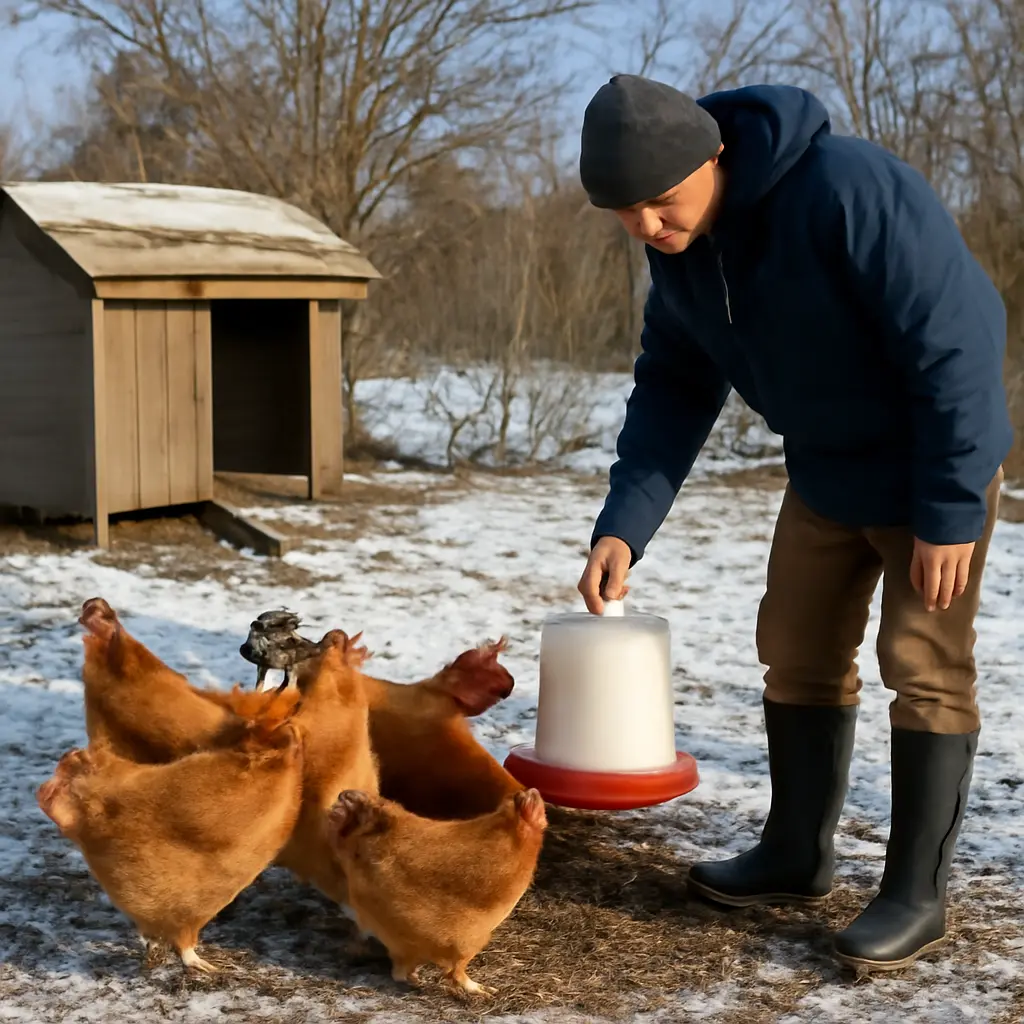
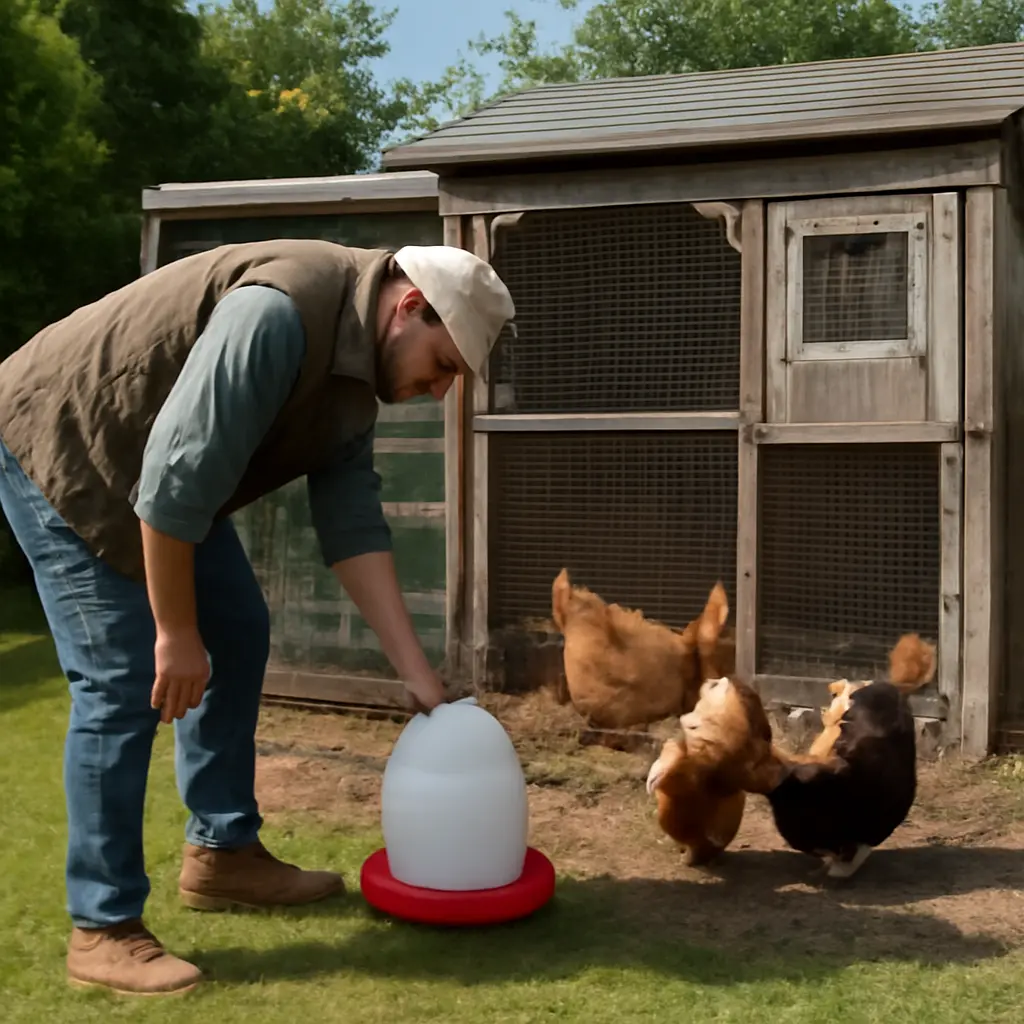
A morning check confirms that all birds are present and behaving normally. Observe appetite, movement, breathing, posture, and whether any bird is separated from the group. Refill drinkers with clean water and provide the flock’s age-appropriate complete feed. The University of California Agriculture and Natural Resources notes that water is essential to poultry health and production; birds may reduce feed intake when water is unavailable or unpalatable. Clean drinkers regularly, and place them where litter and droppings are less likely to contaminate them.
Look over fencing, gates, and the coop for damage, damp bedding, spilled feed, or signs of predators. Remove wet litter and promptly clean up feed that could attract rodents. These quick checks establish a baseline, making unusual behavior easier to recognize later.
Daytime: Gather Eggs and Observe Behavior
During the day, check nesting boxes and collect eggs at least once daily, more often when convenient or in hot weather. Frequent collection helps keep eggs clean and reduces breakage and egg-eating habits. Keep nest boxes dry and stocked with clean bedding. Watch how birds use the run: persistent crowding, feather pecking, or a bird hiding from the flock may indicate stress, injury, or inadequate space and resources.
A simple flock log can record egg numbers, feed changes, unusual symptoms, treatments, and weather conditions. This low-cost record helps distinguish a one-day fluctuation from a continuing issue and can be useful when consulting a veterinarian or extension educator.
Evening: Secure the Coop
At dusk, count the birds as they enter the coop and close the pop door. Confirm that latches are engaged and that openings are protected against predators. The University of Maine Cooperative Extension advises keeping poultry housing secure and protecting birds from predators, which can include raccoons, foxes, dogs, and birds of prey. A sturdy latch matters because some predators can manipulate simple closures.
Before leaving, check that water remains available and that the coop has adequate ventilation without a direct draft at roost level. Remove any bird that appears injured or severely unwell to a safe, appropriately equipped isolation area while seeking expert advice.
Nutrition and Water for Beginner Chicken Care
Chicken nutrition is the provision of a balanced ration matched to a bird’s age and purpose. Complete commercial feeds are formulated to supply key nutrients, including energy, protein, vitamins, and minerals. The main categories are starter feed for chicks, grower feed for developing pullets, and layer feed for laying hens. Feed labels give the intended age or production stage; follow those directions rather than relying on scraps or a single ingredient.
Choose Feed for Age and Purpose
Chicks need a starter ration, while growing birds need feed designed for development. Laying hens generally receive layer feed once they begin laying, because it supplies additional calcium for eggshell formation. Feed requirements vary with age, breed, climate, and production system, so the product label and advice from a poultry veterinarian or extension service should guide decisions. Do not give layer feed to young chicks as their regular ration.
Treats such as vegetables or kitchen scraps should remain limited and should not displace complete feed. Avoid spoiled or moldy food, and check local rules before feeding scraps; regulations and biosecurity guidance can differ. If birds eat whole grains or forage, they may need access to insoluble grit to help grind food in the gizzard. Grit is different from oyster shell, which is a calcium supplement commonly offered separately to laying hens when appropriate.
Keep Water Clean and Available
Water management means ensuring a reliable supply that birds can reach and that remains clean and unfrozen. Use a drinker sized for the flock, clean it frequently, and place it on a stable surface. In freezing weather, check it several times a day or use a safely managed heated system; in hot weather, provide shade and monitor water closely. Never assume a drinker is working just because it was full during the previous check.
Coop, Run, and Predator Protection
Chicken housing is the shelter and enclosed outdoor area that provide protection from weather, predators, and hazards while allowing normal behavior. A practical setup includes a dry coop, roosts, nesting boxes for laying hens, ventilation, cleanable bedding, and a secure run. Space recommendations vary by bird size, climate, and whether birds spend substantial time outside; use guidance from a local extension service and local animal-welfare rules rather than treating one measurement as universal.
Ventilation, Bedding, and Nesting
Ventilation removes moisture, heat, and airborne contaminants, but it should not create a cold draft directly on resting birds. Keep bedding dry and replace soiled areas as needed. Damp conditions can contribute to poor air quality and foot or respiratory problems. Nest boxes should be private, clean, and easy to inspect; many backyard guides suggest approximately one box for every three to four hens, though flock behavior and breed can affect the number needed.
Secure the Run Against Predators
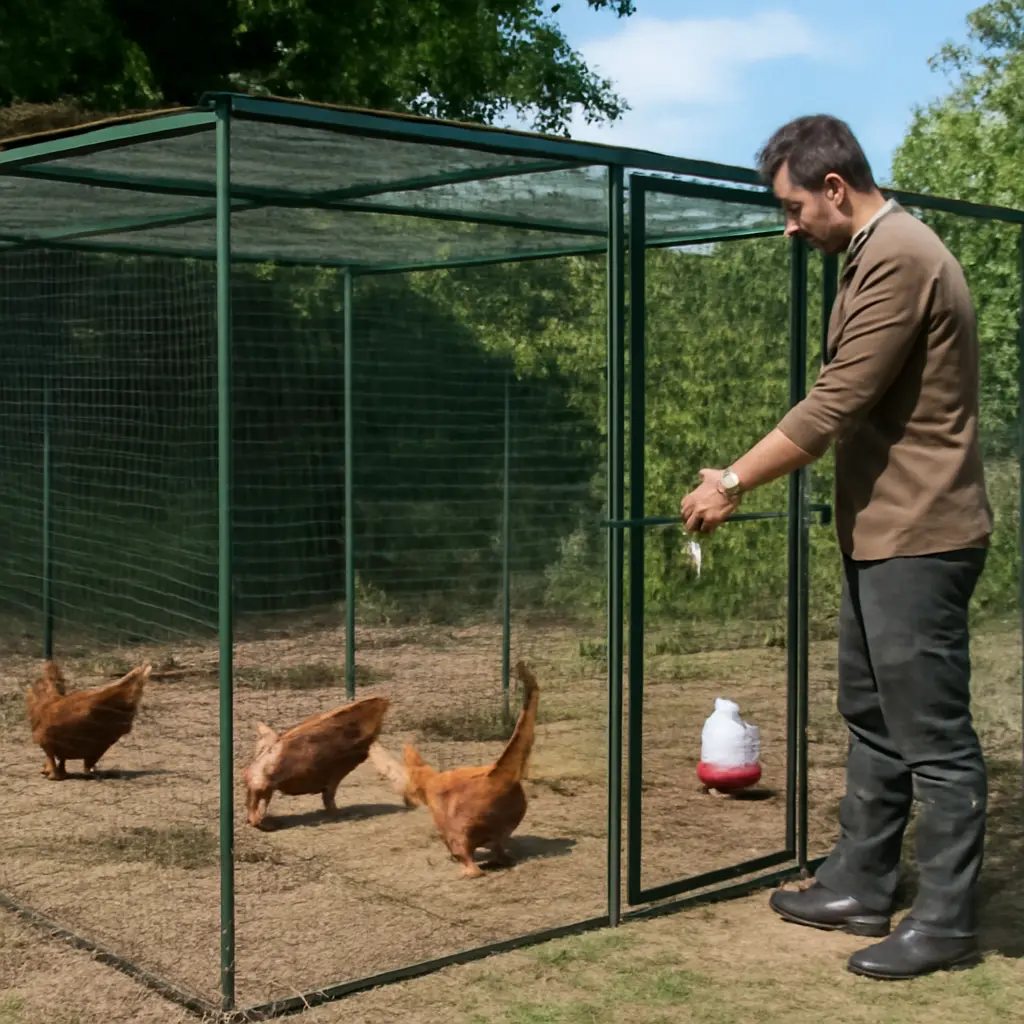
Predator protection combines strong materials, secure closures, and regular inspection. Use appropriate welded wire or hardware cloth on vulnerable openings, secure the perimeter, and address gaps at doors, vents, and rooflines. Ordinary lightweight poultry netting can contain birds but may not stop determined predators. Burying or extending a barrier outward at ground level can help deter animals that dig. Inspect the enclosure after storms and repair damage promptly.
Chicken Health, Hygiene, and Safe Handling
Flock health management is the combination of prevention, observation, sanitation, and timely professional care. The Centers for Disease Control and Prevention (CDC) warns that backyard poultry can carry germs such as Salmonella even when birds look healthy. Good husbandry therefore protects both the flock and the people who care for it.
Recognize Changes and Seek Help
A healthy bird is generally alert, active, eating and drinking, and moving comfortably. Warning signs can include lethargy, reduced appetite, breathing difficulty, unusual droppings, lameness, swelling, sudden production changes, or unexplained deaths. These signs have many possible causes and cannot be reliably diagnosed from appearance alone. Contact a poultry veterinarian or state agricultural extension service for guidance, especially if several birds are affected or symptoms worsen quickly.
Quarantine new birds before introducing them to an established flock, and isolate sick or injured birds when practical. Use dedicated footwear and equipment, avoid sharing tools between flocks without cleaning, and follow local reporting requirements for suspected serious poultry disease. A veterinarian can advise on vaccination, parasite control, and a health plan appropriate to the region.
Clean Hands and Handle Birds Gently
The CDC recommends washing hands with soap and water after touching poultry, eggs, or anything in their environment, and keeping poultry and poultry equipment away from areas where food is prepared. Children under five, adults aged 65 and older, and people with weakened immune systems are at higher risk of serious illness from Salmonella. Do not kiss or snuggle birds, and supervise children around the flock.
To handle a chicken, approach calmly and support its body, keeping the wings gently controlled without squeezing the chest. Avoid carrying birds by their legs or wings. Calm handling reduces stress and lowers the chance of injury to both bird and handler.
Seasonal Adjustments and Common Beginner Challenges
Seasonal chicken care adapts housing, water, and observation to changing weather and daylight. A routine that works in mild spring weather may not be adequate during summer heat, winter freezing, or periods of heavy rain. Local climate and breed characteristics matter, so check regional extension guidance.
Heat, Cold, and Molting
In hot weather, provide shade, airflow, and abundant cool water; watch for panting, weakness, or unusual stillness and seek veterinary advice if a bird appears distressed. In cold or wet conditions, prioritize dry bedding, protected water, and ventilation that removes moisture. Avoid sealing the coop so tightly that humidity and ammonia build up. During molting, hens replace feathers and may temporarily lay fewer eggs; maintain a balanced ration and avoid unnecessary handling of sensitive new feathers.
Egg Production and Flock Expectations
Egg output changes with age, breed, daylight, nutrition, health, and season. Not every hen lays daily, and production commonly declines as birds age. Backyard keepers should plan for feed, care, and end-of-life responsibilities rather than assuming a flock will provide a fixed number of eggs indefinitely. Before acquiring birds, check municipal rules, noise restrictions, limits on flock size, and whether roosters are permitted.
A Practical Daily Checklist for New Keepers
A written checklist turns chicken care into a manageable habit. Adjust it to flock size, equipment, weather, and professional advice.
- Morning: count birds, observe behavior, refill clean water, provide the correct feed, and inspect the coop and run.
- During the day: gather eggs, check nesting boxes, observe flock interactions, and note unusual symptoms or production changes.
- Evening: count birds into the coop, secure doors and latches, check ventilation and water, and remove hazards.
- Regularly: clean drinkers and feeders, replace wet bedding, inspect fencing, manage manure safely, and review local veterinary or extension guidance.
For example, if a hen stops eating and stays apart from the flock, a keeper can record the change, check access to food and water, separate the bird safely if needed, and contact a poultry veterinarian rather than guessing at treatment. This approach combines observation with timely expert input.
Conclusion: Build a Reliable Chicken-Care Routine
Beginner chicken care is a daily commitment to observation, clean water, balanced feed, safe housing, and responsible health practices. Morning checks help identify problems early; daytime egg collection and behavior monitoring reveal changes; evening lockup protects the flock from predators. Seasonal adjustments, careful hygiene, and veterinary guidance support both bird welfare and household safety. Before bringing chickens home, review local rules, prepare secure housing, and identify a poultry veterinarian or extension resource. Then use a simple daily checklist and keep learning as the flock’s needs change.
Sources: U.S. Department of Agriculture, National Agricultural Statistics Service, Chickens and Eggs, January 2024, https://www.nass.usda.gov/Publications/Todays_Reports/reports/ckeg0124.pdf; University of Minnesota Extension, Raising chickens for eggs, https://extension.umn.edu/small-scale-poultry/raising-chickens-eggs; University of California Agriculture and Natural Resources, Poultry: Resources for Small Flocks, https://ucanr.edu/site/poultry/resources-small-flocks; University of Maine Cooperative Extension, Raising Poultry, https://extension.umaine.edu/publications/2225e/; Centers for Disease Control and Prevention, Backyard Poultry, https://www.cdc.gov/healthy-pets/about/backyard-poultry.html