
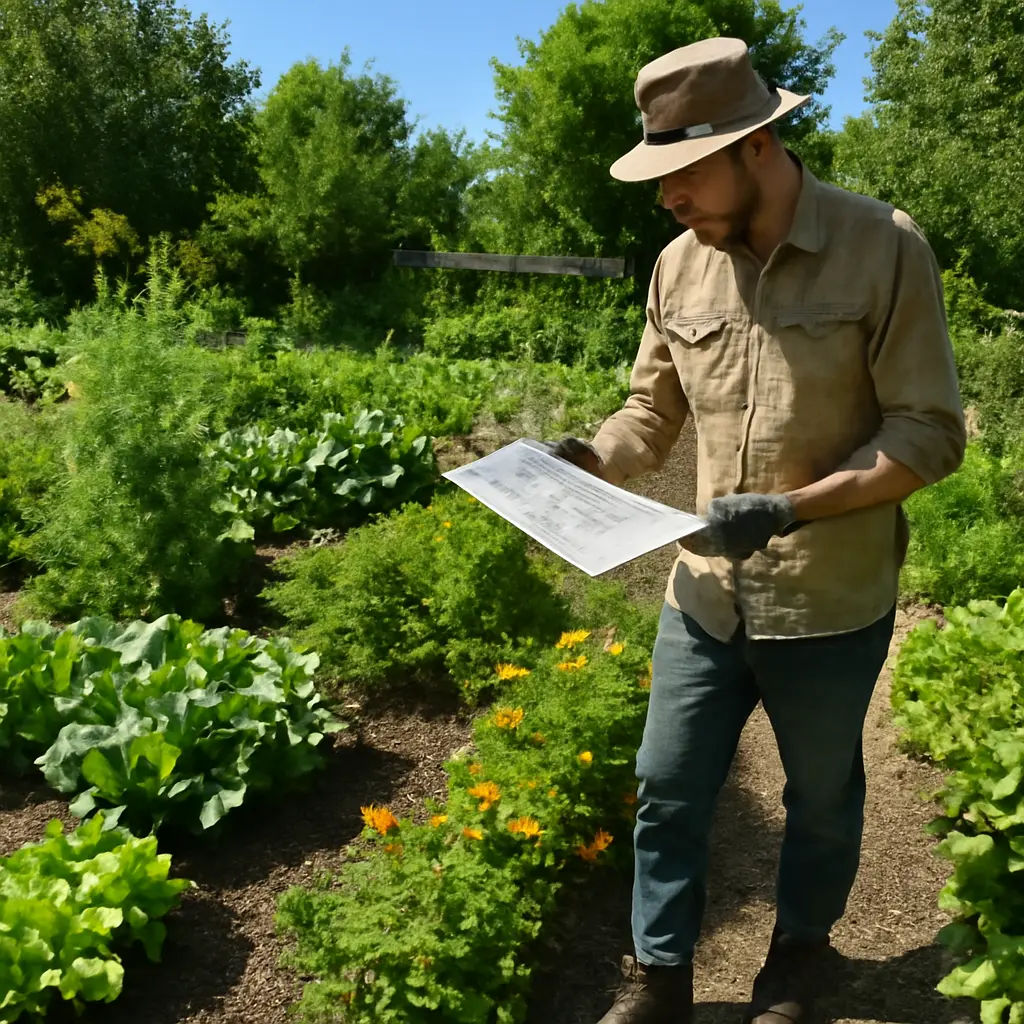
Free-range gardening means growing plants with room to spread and some freedom from rigid rows, not gardening without a plan. A productive free-range garden still needs thoughtful choices about sunlight, spacing, soil, water, and pathways. The National Gardening Association reports that gardening can take many forms and scales, but even informal planting depends on matching plants to their conditions. Planning matters especially because most vegetables need at least six hours of direct sun a day, according to the University of Minnesota Extension. Understanding what free-range means, how to design a flexible layout, and how to manage planting and upkeep can help beginners create a garden that feels natural without becoming chaotic.
Free-range gardening means flexible design, not no planning
“Free-range gardening” is an informal description rather than a standardized horticultural method. It generally refers to a less formal arrangement in which plants may mingle, spill beyond conventional beds, or grow in loose groupings instead of strict rows. University extension services typically recommend planning gardens around practical requirements such as light, soil, mature plant size, water access, and paths—even when the finished design looks casual.
The key distinction is between a flexible plan and no plan. A gardener can let flowers self-seed or allow squash to wander while still deciding where those plants can grow without blocking a walkway or shading a neighboring crop. The U.S. Department of Agriculture’s Plant Hardiness Zone Map helps gardeners assess winter temperature suitability, while local extension guidance can clarify planting dates and region-specific risks.
Free-range style compared with formal rows
Formal row gardening organizes plants into regular lines with defined aisles. Free-range layouts may instead use clusters, mixed plantings, curved bed edges, or self-seeding patches. Neither approach removes the need to know how large plants will become. For example, a compact lettuce can fit between slower-growing crops, but a mature tomato or sprawling winter squash needs enough room and light to avoid crowding its neighbors.
What planning accomplishes
A basic plan prevents common beginner problems: planting sun-loving crops in shade, placing thirsty plants beyond easy reach of a hose, or sowing more than can be harvested. The University of Minnesota Extension advises choosing a site with at least six hours of direct sunlight for most vegetables. Planning also helps gardeners rotate plant families between seasons; crop rotation can reduce the buildup of some pests and diseases in the same patch of soil.
Free-range garden design depends on site and space
A flexible garden works best when its loose appearance is grounded in a few fixed decisions: where the light falls, how people move through the space, and which plants belong in each area. These decisions create structure without requiring a rigid grid. A sketch, even a simple one, can record beds, existing trees, water sources, and paths before planting begins.
Sunlight, soil, and water
Sunlight is a site condition that shapes crop choice. Track the sun across the proposed garden, since nearby buildings and trees can cast shade at different times of day. Soil is another key factor: a soil test can identify pH and nutrient issues that are not obvious from appearance alone. The U.S. Department of Agriculture’s Natural Resources Conservation Service describes soil health in terms of its capacity to function as a living ecosystem, supporting plants, water movement, and biological activity.
Water access should be considered before planting, too. A bed that looks charming at the far end of a yard can become difficult to maintain if it is inconvenient to water. Grouping plants with similar water needs can make care more efficient, while mulch can help reduce evaporation and suppress weeds.
Paths, mature size, and plant spacing
Paths are the practical framework of a relaxed garden. They provide access for watering, harvesting, pruning, and weeding, and help prevent people from compacting growing soil. Plan them around how the garden will actually be used, including whether a wheelbarrow or mobility aid needs to pass through.
Spacing should reflect mature plant size, not the tiny size of seedlings at planting time. Seed packets and plant labels usually list spacing recommendations; those instructions are useful even in mixed or informal beds. Crowding can limit airflow, make harvesting difficult, and increase the chance that leaves stay damp after rain.
Free-range planting can mix crops and flowers with intention
Once the site is understood, gardeners can choose how informal the planting should be. Mixing plant types can make a garden visually varied and may support pollinators, but combinations should be selected for compatible light, water, growth habits, and harvest timing. A useful free-range garden is not a random assortment: it is a community of plants with enough room and resources to thrive.
Mixed beds and companion planting
Mixed beds place different crops or ornamental plants together rather than separating every kind into its own row. Gardeners may combine a low-growing crop with a taller one, provided the taller plant does not block needed sunlight. “Companion planting” is often used to describe combinations believed to benefit one another, but specific claims vary in evidential support. It is safer to base combinations first on documented growing needs and then treat unverified benefits as possibilities rather than guarantees.
Self-seeding flowers and volunteer plants
Self-seeding plants drop seeds that can germinate in later seasons, sometimes in unexpected places. Volunteers can add a natural, shifting look, but they still need management. Keep seedlings that are healthy and well placed; remove those that compete with crops, crowd paths, or are difficult to identify. The Royal Horticultural Society notes that self-seeding can be encouraged by allowing some plants to set seed, while gardeners can control where seedlings remain through thinning and removal.
Succession planting and seasonal changes
Succession planting means sowing or transplanting crops at intervals so that harvests are spread over time, or replacing a finished crop with another suited to the season. This is particularly useful in a small garden, where one patch can serve more than one purpose during the year. Record planting dates and results so next season’s flexible layout is informed by what actually grew well.
Free-range maintenance still needs regular observation
A loosely arranged garden may look spontaneous, but it benefits from short, regular check-ins. Observation helps gardeners catch dry soil, pest damage, overcrowding, and weeds before problems become difficult to manage. Maintenance does not have to mean constant tidiness; it means noticing what is happening and acting when a plant’s health or the garden’s usability is at risk.
Weeds, pests, and disease
Weeds compete with garden plants for light, water, and nutrients, so removing them while they are small is usually easier than waiting until they set seed. Integrated pest management, promoted by the U.S. Environmental Protection Agency, combines prevention, monitoring, and carefully chosen controls rather than relying automatically on pesticides. In practice, this can mean inspecting leaves, identifying a pest before treating it, encouraging beneficial organisms, and removing badly affected plant material when appropriate.
Watering and harvesting
Water plants according to their needs and local conditions rather than following a fixed schedule without checking the soil. Containers and raised beds can dry faster than in-ground soil, and young seedlings may need closer attention than established plants. Harvesting regularly can also keep a garden productive: many crops become less tender or stop producing as readily when ripe produce is left unpicked.
A beginner-friendly example
Imagine a sunny backyard with one accessible bed and a narrow path. A beginner could place tomatoes at the back where they will not shade smaller plants, put herbs near the path for easy harvesting, and sow a short-season leafy crop in an open patch before a larger plant fills the space. A few flowers can be added where their mature size will not crowd vegetables. The arrangement can remain informal, but the choices account for sun, access, spacing, and timing.
Conclusion: Free-range gardening rewards planning that leaves room to adapt
Free-range gardening is best understood as flexible design, not an absence of decisions. A successful informal garden starts with the site, then accounts for sunlight, soil, water, pathways, mature plant size, and seasonal timing. Mixed beds, self-seeding flowers, and succession planting can add variety, while observation and basic maintenance keep the garden healthy and usable.
Start small: check your local growing conditions, sketch a simple layout, and choose a few plants suited to your space. As the garden grows, keep notes and adjust the plan. For more region-specific advice, consult a nearby university extension service and use its recommendations alongside seed-packet and plant-label guidance.
Sources: University of Minnesota Extension, “Planning a vegetable garden,” https://extension.umn.edu/planting-and-growing-guides/planting-vegetable-garden; USDA Agricultural Research Service, “2023 USDA Plant Hardiness Zone Map,” https://planthardiness.ars.usda.gov/; USDA Natural Resources Conservation Service, “Soil Health,” https://www.nrcs.usda.gov/conservation-basics/natural-resource-concerns/soils/soil-health; U.S. Environmental Protection Agency, “Integrated Pest Management (IPM) Principles,” https://www.epa.gov/safepestcontrol/integrated-pest-management-ipm-principles; Royal Horticultural Society, “Self-seeding plants,” https://www.rhs.org.uk/plants/types/flowers/self-seeding-plants


