
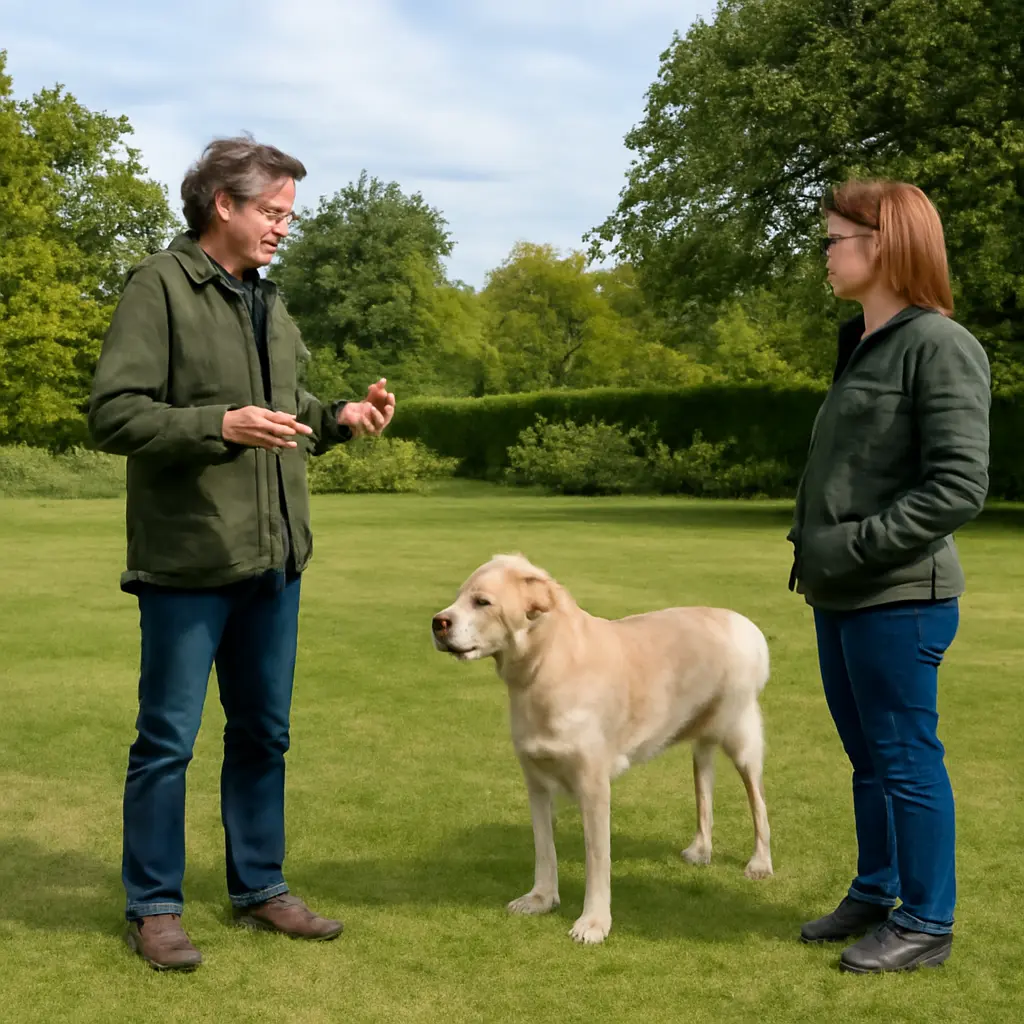
Dog temperament is the relatively consistent pattern of emotional and behavioral responses a dog shows toward people, animals, and everyday situations. Reputable breeders do not all conceal temperament information, but some emphasize pedigree, appearance, or early puppy behavior without fully explaining how inherited tendencies, socialization, and adult development may affect a dog at home. That gap matters: the American Veterinary Medical Association estimates that about 4.5 million people in the United States are bitten by dogs each year, while most dogs are not dangerous and risk depends on circumstances, behavior, and management. Understanding what temperament tests can—and cannot—tell you, which questions to ask a breeder, and how to prepare for a puppy can help families make a better-informed choice.
Dog Temperament and Breeder Disclosure: What Buyers Need to Know
Temperament is not a guarantee that a dog will behave identically in every setting. It describes tendencies, such as sociability, confidence, sensitivity, activity, and responses to unfamiliar people or stress. The American Kennel Club describes breed standards as outlining desired characteristics, including temperament, but a breed description is a broad guide—not a prediction of an individual dog’s behavior. Buyers should look beyond labels like “family-friendly” or “calm” and ask for specific, documented information about the parents, relatives, and puppies.
What responsible disclosure looks like
Responsible disclosure means a breeder explains both strengths and limitations relevant to a puppy’s likely needs. This includes the parents’ behavior in ordinary life, known sensitivities or fears, activity levels, social preferences, and any history of serious behavior problems. The American Veterinary Society of Animal Behavior emphasizes that behavior is shaped by both genetics and experience; therefore, a breeder’s observations are useful evidence, but not a promise about the puppy’s future.
A useful account is concrete: “The dam takes time to warm up to strangers and prefers a quiet home” tells a buyer more than “She has a great temperament.” Buyers can ask how the breeder reached that conclusion, whether the behavior is consistent across settings, and whether other dogs in the family show similar traits.
Why temperament can be underplayed
Temperament may receive less attention than health clearances, pedigree, or appearance because behavior is harder to summarize and predict. A puppy’s conduct during a short visit can also be misleading: fatigue, excitement, a new environment, and the presence of littermates may all affect what a buyer sees. Claims that a puppy is “guaranteed” to be gentle, easy, or suitable for children should be treated cautiously; no brief test can assure future behavior.
This does not mean every breeder who speaks confidently is hiding a problem. Rather, buyers should distinguish clear, candid discussion from marketing language. A breeder who welcomes questions and talks openly about uncertainty is generally offering more useful information than one who relies on sweeping guarantees.
Inherited Traits and Dog Temperament
Inherited temperament traits are behavioral tendencies influenced in part by a dog’s genetic makeup. They are not fixed outcomes: development, learning, health, and environment also matter. In a 2019 study published in Science, researchers analyzed behavioral and genetic data from more than 18,000 dogs and found that breed was associated with some behavioral differences, but explained only about 9% of behavioral variation among individual dogs. The finding is a reminder that breed can offer context, not a reliable stand-in for knowing an individual animal.
Breed tendencies are not individual guarantees
Breed tendencies are patterns that may appear more often in a population, such as strong retrieving interest, herding behavior, or high energy. The American Kennel Club’s breed standards describe intended characteristics, but dogs within the same breed can differ substantially. A buyer should ask what the breeder’s own dogs are like, how they behave in the home, and whether their needs match the buyer’s experience and routine.
For example, a dog from working lines may need more structured activity than a household expects, even if the puppy is currently quiet. Ask about the adult dogs’ exercise, training, sensitivity to noise, and ability to settle indoors. Those details help translate an abstract breed reputation into practical expectations.
Family history and selection
A dog’s family history can provide clues because some behavioral tendencies may run in families. Breeders can describe the parents and, when known, adult offspring or close relatives. Ask whether relatives have shown persistent fear, difficulty recovering after startling events, intense reactivity, or unusually strong guarding behavior. A single anecdote does not establish a genetic pattern, but repeated observations deserve careful discussion.
Temperament selection should be considered alongside health testing and sound breeding practices. The Orthopedic Foundation for Animals’ Canine Health Information Center program provides breed-specific health-screening recommendations; health screening does not measure temperament, but it is an important part of evaluating a breeding program. Buyers should request verifiable results and ask how the breeder balances health, behavior, and conformation goals.
Socialization, Development, and Behavior Change
Socialization is the gradual, positive introduction of a young dog to people, animals, environments, handling, and everyday experiences. It influences how a puppy learns to respond, but it cannot erase every inherited tendency or guarantee a particular adult personality. The American Veterinary Society of Animal Behavior’s puppy socialization guidance recommends safe exposure before the completion of the entire vaccine series, in coordination with veterinary advice, because the early developmental period is important for learning.
Early experiences and the sensitive period
The sensitive socialization period is an early developmental window when puppies are especially receptive to learning about their surroundings. The exact timing varies among individuals, but commonly cited guidance places much of this period in the first few months of life. Good socialization is not simply exposure to as many things as possible: experiences should be controlled, safe, and positive, with the puppy able to retreat or rest.
Ask a breeder what the puppies have experienced, how they respond to handling and ordinary household sounds, and whether exposure is adjusted for individual puppies. A checklist of experiences is less meaningful than knowing whether the puppy appeared comfortable and recovered readily. After adoption, continue gradual introductions and consult a veterinarian about infection risks and suitable classes.
Temperament tests have limits
Puppy temperament tests are structured observations of behavior in selected situations, such as response to a new object, a person, or mild restraint. They can help describe what a puppy did at a particular time, but test results are not a dependable forecast of adult behavior. The American Veterinary Society of Animal Behavior cautions that early behavior assessments should not be treated as definitive predictions, especially when a puppy’s environment and development will change.
Ask who conducted any assessment, what method was used, and whether results were shared as observations rather than guarantees. A breeder’s repeated observations over several weeks, combined with information about the parents and family, are generally more informative than a single “dominance” or “personality” score.
Behavior can change with age, health, and context
A dog’s behavior can shift as it matures, encounters new situations, or experiences pain and illness. A puppy that is outgoing in a familiar room may become cautious in a busy setting; a previously tolerant dog may behave differently when injured or frightened. The American Veterinary Medical Association advises consulting a veterinarian about sudden behavior changes because medical conditions can contribute to behavioral problems.
This is why a breeder’s description should be treated as a starting point, not a lifetime guarantee. Buyers should plan for routine veterinary care, reward-based training, and professional help if persistent fear or aggression develops.
Questions to Ask a Breeder About Temperament
Direct, open-ended questions help reveal whether a breeder knows the dogs as individuals and is prepared to discuss realistic expectations. The goal is not to demand a perfect puppy; it is to understand likely needs and make a suitable match.
Questions about parents and relatives
- How do the mother and father behave with unfamiliar people, children, other dogs, and routine handling?
- What helps each parent settle after excitement or a startling event?
- Have you observed persistent fear, reactivity, guarding, or difficulty coping in close relatives?
- Can I meet the mother and see how she behaves in a normal setting?
- What are the adult dogs’ daily exercise, training, and enrichment needs?
Meeting the mother can provide useful context, but her behavior during a visit may be affected by the setting, visitors, or care of the litter. If the father is not available, ask for detailed information and, where possible, observations from people who know him. Consider how the breeder responds: thoughtful answers and appropriate limits are more credible than claims that every dog is “perfect.”
Questions about puppy observations and matching
- How have you observed each puppy’s confidence, activity, sociability, and recovery from new experiences?
- What experiences have the puppies had, and how were their reactions handled?
- How will you match a puppy to my household, experience, and activity level?
- What behavior concerns have you seen in this litter, and what support do you offer after adoption?
- What happens if the placement does not work out?
A responsible breeder may recommend a puppy based on the household rather than allowing buyers to choose solely by color or the first puppy to approach them. The breeder should also explain that matching is an informed judgment, not a guarantee, and provide a clear return or rehoming policy.
Red Flags and Practical Buyer Safeguards
A temperament-related red flag is a claim that discourages reasonable questions or promises certainty that no breeder can provide. Buyers should be cautious when a seller dismisses fear or aggression as “just a phase,” refuses to discuss the parents, or insists that a breed label alone proves a dog is safe or suitable for every home.
Warning signs in breeder claims
- Guarantees that a puppy will never bite, be fearful, or develop behavior problems.
- Refusal to answer questions about the parents’ behavior or known family history.
- Pressure to pay immediately, take a puppy before it is ready, or skip a written contract.
- Descriptions limited to “friendly,” “dominant,” or “perfect with kids,” without examples.
- No plan for taking a dog back or helping if the placement fails.
These signs do not prove that a puppy will have a behavior problem, but they reduce a buyer’s ability to assess risk and make a suitable choice. The Humane Society of the United States advises prospective adopters and buyers to investigate the source of a dog and avoid decisions based on pressure or appearance alone.
A practical evaluation checklist
- Write down your household’s needs, including children, other pets, schedule, and activity level.
- Ask for specific descriptions of both parents and relevant relatives.
- Review health testing and request records from the appropriate health databases or veterinary professionals.
- Observe puppies over time, not only during a brief, exciting visit.
- Discuss early socialization, post-adoption support, and the return policy in writing.
- Plan a veterinary visit and reward-based training after bringing the dog home.
For a visual aid, a buyer can create a simple comparison chart with rows for energy, sociability, sensitivity, recovery from stress, and handling tolerance, and columns for each parent and puppy. Record the breeder’s concrete examples and mark unknowns rather than filling gaps with assumptions.
Conclusion: Ask for Evidence, Not Promises
Dog temperament reflects inherited tendencies as well as socialization, health, learning, and context. Breed information and puppy assessments can offer useful clues, but neither can guarantee an individual dog’s future behavior. Buyers should ask breeders for specific observations about parents, relatives, and puppies; verify health information; and look for honest discussion of uncertainty, support, and return arrangements.
Before choosing a puppy, write down your household’s priorities and use the questions and checklist above to compare what breeders tell you. For further guidance, consult your veterinarian, a qualified reward-based trainer, and reputable behavior resources. A thoughtful match and continued positive training benefit the dog, the household, and the wider community.
Sources: American Veterinary Medical Association, Dog Bite Prevention, https://www.avma.org/resources-tools/pet-owners/dog-bite-prevention; Morrill et al., “Ancestry-inclusive dog genomics challenges popular breed stereotypes,” Science, 2022, https://www.science.org/doi/10.1126/science.abk0639; American Kennel Club, Breed Standards, https://www.akc.org/sports/conformation/; American Veterinary Society of Animal Behavior, Position Statement on Puppy Socialization, https://avsab.org/resources/position-statements/; Orthopedic Foundation for Animals, Canine Health Information Center, https://ofa.org/chic-programs/; Humane Society of the United States, How to Find a Responsible Dog Breeder, https://www.humanesociety.org/resources/how-find-responsible-dog-breeder.
