
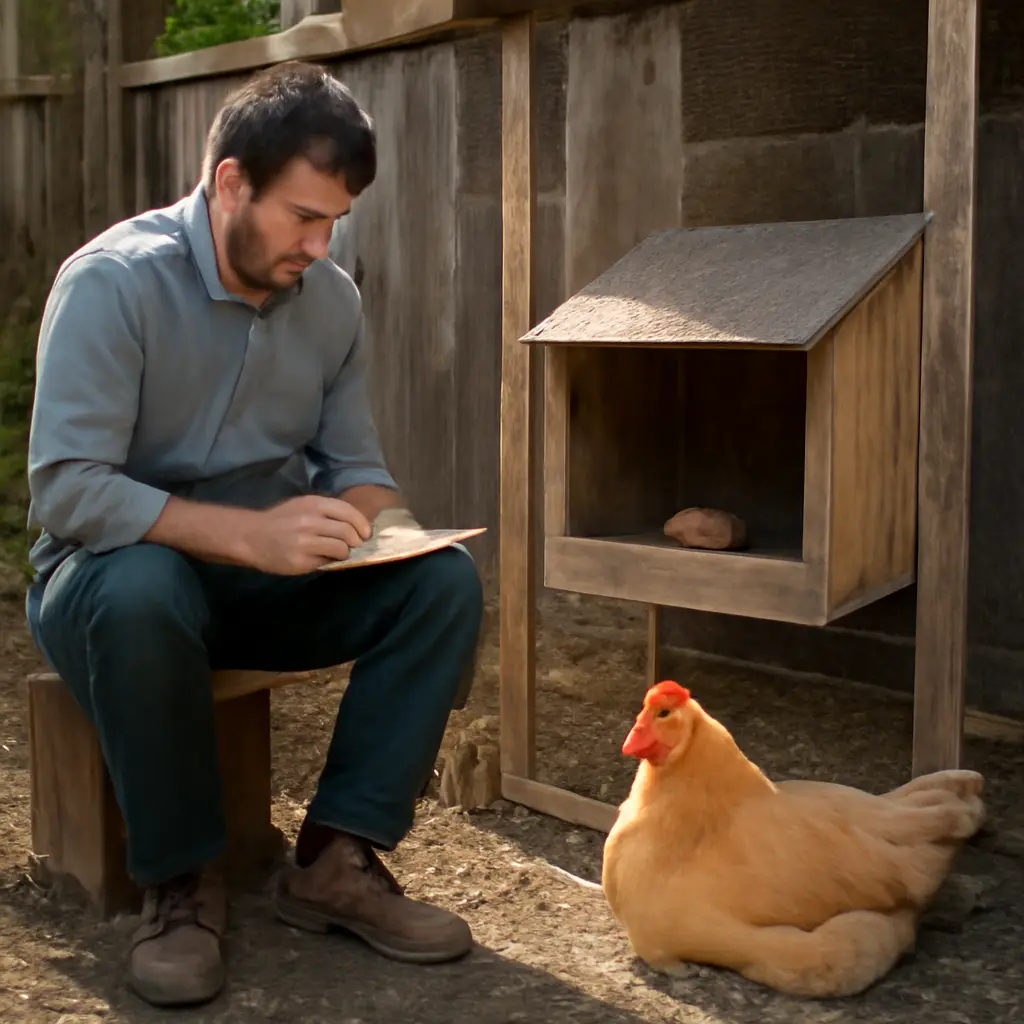
A chicken clutch is a group of eggs laid by a hen over a sequence of days, while lay timing describes when and how regularly she produces them. Reading these patterns helps a flock keeper distinguish ordinary pauses from changes that may merit attention, plan egg collection and incubation, and make sensible adjustments to light, nutrition, and housing. There is no single schedule that fits every hen: age, breed, season, health, and management all matter. University extension guidance and poultry research offer useful benchmarks, but a keeper’s most valuable tool is a consistent record of each bird’s laying pattern.
Clutch patterns and lay timing: what the terms mean
In poultry science, a clutch is a consecutive series of eggs laid by a hen, ordinarily followed by a pause before the next series. Lay timing includes the interval between eggs, the time of day eggs are laid, and the longer-term rhythm of production. The precise number of eggs in a clutch is not fixed: it can differ among hens and change with age, season, and reproductive condition.
The pattern is useful because egg production is rhythmic rather than perfectly continuous. A hen’s egg-formation cycle takes roughly 24 to 26 hours, according to poultry-science references including the Merck Veterinary Manual. When a hen lays on successive days, the laying time tends to move later; after enough cycles, the next egg may be delayed until the following day or the hen may pause. These are broad biological tendencies, not a promise that every bird follows an identical timetable.
Clutch length and pauses
Clutch length means the count of eggs laid in a consecutive run before a pause. A pause of a day does not by itself establish that something is wrong. It may be part of the bird’s ordinary cycle, particularly when the hen is young, older, molting, broody, or responding to a seasonal change. Compare each hen with her own previous pattern rather than treating one flock-wide number as a diagnostic standard.
Time of day and the laying cycle
A hen that lays regularly may produce eggs at progressively later times across a laying sequence because the egg-formation cycle commonly exceeds one day. If that cycle pushes the next expected egg beyond the daylight hours, the sequence can include a skipped day. Record approximate lay times alongside egg counts; the combined pattern is more informative than either observation alone.
Daily, seasonal, and lifetime patterns
Daily timing concerns the hour eggs appear; seasonal timing concerns changes across the year; lifetime patterns reflect development and aging. These scales overlap but should not be confused. A hen may maintain a familiar within-week rhythm while producing fewer eggs during short winter days, or she may stop laying temporarily while broody even though her general health appears normal.
Reading a hen’s clutch pattern in context
A clutch record becomes meaningful when it is interpreted alongside the bird’s age, breed, environment, and condition. The University of Minnesota Extension notes that commercial laying hens can reach high annual production under controlled conditions, but backyard output varies substantially with genetics and management. Production figures for selected commercial strains should not be treated as a forecast for every small-flock hen.
Breed and age
Breed influences expected production, egg size, and persistence of lay. High-production egg breeds are generally selected to lay more consistently than many dual-purpose or ornamental breeds. Age also matters: pullets begin laying at different ages, and production commonly changes as hens mature. A drop in output in an older bird may be gradual and normal, but a sudden change still deserves a closer look.
Day length and season
Light is a major environmental cue for reproduction. University extension publications commonly explain that laying hens need a sufficiently long day, often around 14 to 16 hours of total light, to support sustained production. Natural day length declines in fall and winter in many regions, so laying may slow. Artificial lighting can affect production, but any lighting plan should be consistent and should allow a dark period for rest; abrupt changes can disrupt the flock’s routine.
Molting, broodiness, and stress
Molting is the replacement of feathers, and it can coincide with a marked reduction or pause in egg production as the hen redirects resources. A broody hen is strongly inclined to sit on and incubate eggs; she may stop laying while that behavior persists. Heat, cold, predator disturbance, crowding, transport, or other stressors can also alter a clutch pattern. The timing and duration vary, so look for the accompanying signs rather than attributing every pause to one cause.
Using clutch and lay records to manage a flock
The practical value of recording is not that it identifies a disease on its own. It gives the keeper a baseline, helps reveal flock-level changes, and makes it easier to describe a problem to a poultry veterinarian or extension specialist. A simple log can also clarify whether eggs are being missed, laid outside the nest, or eaten.
A simple record-keeping method
For identifiable hens, note the date, egg count, approximate laying time, shell condition, and any relevant behavior. Add observations about feed, water, lighting, weather, molt, and nesting. If individual identification is impractical, track the flock total and note major changes in the group. Collect eggs at consistent intervals so that apparent gaps are less likely to reflect missed eggs.
- Record daily production and mark days with no eggs.
- Note unusual eggs, including soft shells, cracks, or abnormal shape.
- Track changes in feed, water access, lighting, and housing.
- Observe appetite, activity, droppings, body condition, and signs of broodiness or molt.
Interpreting a change without overreacting
A brief pause in one hen that is otherwise active and eating may fit her normal variation. A sudden flock-wide decline suggests checking shared factors first, such as feed quality, water supply, day length, temperature, or disturbance. A decline in one bird accompanied by lethargy, reduced appetite, abnormal droppings, straining, or a swollen abdomen is more concerning and warrants prompt veterinary advice. Egg production alone cannot establish the cause.
Nutrition, water, and housing checks
Laying hens need a complete ration formulated for layers, reliable clean water, and appropriate access to nesting areas. A change in production is a useful prompt to verify that feed is fresh and suitable for the birds’ stage of life, that feeders and drinkers work, and that hens are not being displaced by flock mates. Avoid trying to correct a suspected nutritional problem with supplements or abrupt diet changes without reliable poultry guidance.
Clutch patterns in incubation and egg collection
For keepers who hatch chicks, clutch timing helps organize egg collection, storage, and setting. Eggs intended for incubation should be collected frequently, handled carefully, and stored under suitable conditions. The University of Kentucky Cooperative Extension and other poultry authorities emphasize that hatchability depends on factors including egg freshness, storage, and steady incubation conditions; a hen’s laying rhythm does not by itself determine whether an egg is fertile or viable.
Selecting and storing hatching eggs
Choose clean, sound eggs of typical shape and size for the breed, and avoid washing them in ways that damage the protective shell bloom unless following a recognized sanitation protocol. Keep dates on stored eggs so older eggs are not inadvertently held too long. Because recommended storage temperature, humidity, and duration depend on the hatchery method and local guidance, follow a current extension or incubator-manufacturer protocol rather than relying on the clutch sequence alone.
Using timing to plan collection
Knowing when a hen usually lays can help reduce the time eggs sit in a nest and can improve the keeper’s chance of collecting them promptly. It can also reveal whether a hen tends to lay outside the nest or whether a nest box is being monopolized. For a small flock, a few weeks of consistent records often provide a more useful practical forecast than a generic production chart.
Conclusion: use patterns as clues, not diagnoses
Clutch length, pauses, time of day, and seasonal production are connected parts of a hen’s laying rhythm. The egg-formation cycle helps explain why production is not perfectly daily, while breed, age, light, molt, broodiness, nutrition, and stress shape the pattern each keeper observes. Keeping a simple record establishes a personal baseline and helps distinguish ordinary variation from a meaningful change.
Use those records to check management conditions and to communicate clearly with a poultry professional when concerns arise. For further guidance, consult current university extension publications or a veterinarian experienced with poultry, especially when a production change occurs alongside illness signs.
Sources: Merck Veterinary Manual, Management of Laying Chickens, https://www.merckvetmanual.com/management-and-nutrition/management-of-poultry/management-of-laying-chickens; University of Minnesota Extension, Raising chickens for eggs, https://extension.umn.edu/small-scale-poultry/raising-chickens-eggs; University of Kentucky Cooperative Extension, Hatching Eggs, https://www2.ca.uky.edu/agcomm/pubs/ASC/ASC200/ASC200.pdf; Mississippi State University Extension, Feeding the Laying Hen, https://extension.msstate.edu/publications/feeding-the-laying-hen


